E-commerce operationsE-commerceUX/UI designSecurityMarketing on the InternetIT strategy10 min czas czytania10 943 znaki1806 słów
Online Payment Methods for EU Stores — Cards, Wallets, Bank Redirects and BNPL
Online payment methods for EU stores: card SCA rules, Apple Pay, Google Pay, iDEAL, Bancontact and Klarna BNPL rates, each with its published cost and risk.
Redakcja Digital VantageYour Partner in Business, Digital Vantage Team · Digital Vantage team is a group of experienced professionals combining expertise in web development, software engineering, DevOps, UX/UI design and digital marketing. Together we carry out projects from concept to implementation - websites, e-commerce stores, dedicated applications and digital strategies.
Our team combines years of experience from technology corporations with the flexibility and immediacy of working in a smaller, close-knit structure. We work in agile methodologies, focus on transparent communication and treat each project as if it were our own business.
The strength of the team is the diversity of perspectives - from systems architecture and infrastructure, frontend and design, to SEO and content marketing strategy. As a result, the client receives a cohesive solution where technology, aesthetics and business goals go hand in hand.
Publikacja
Aktualizacja
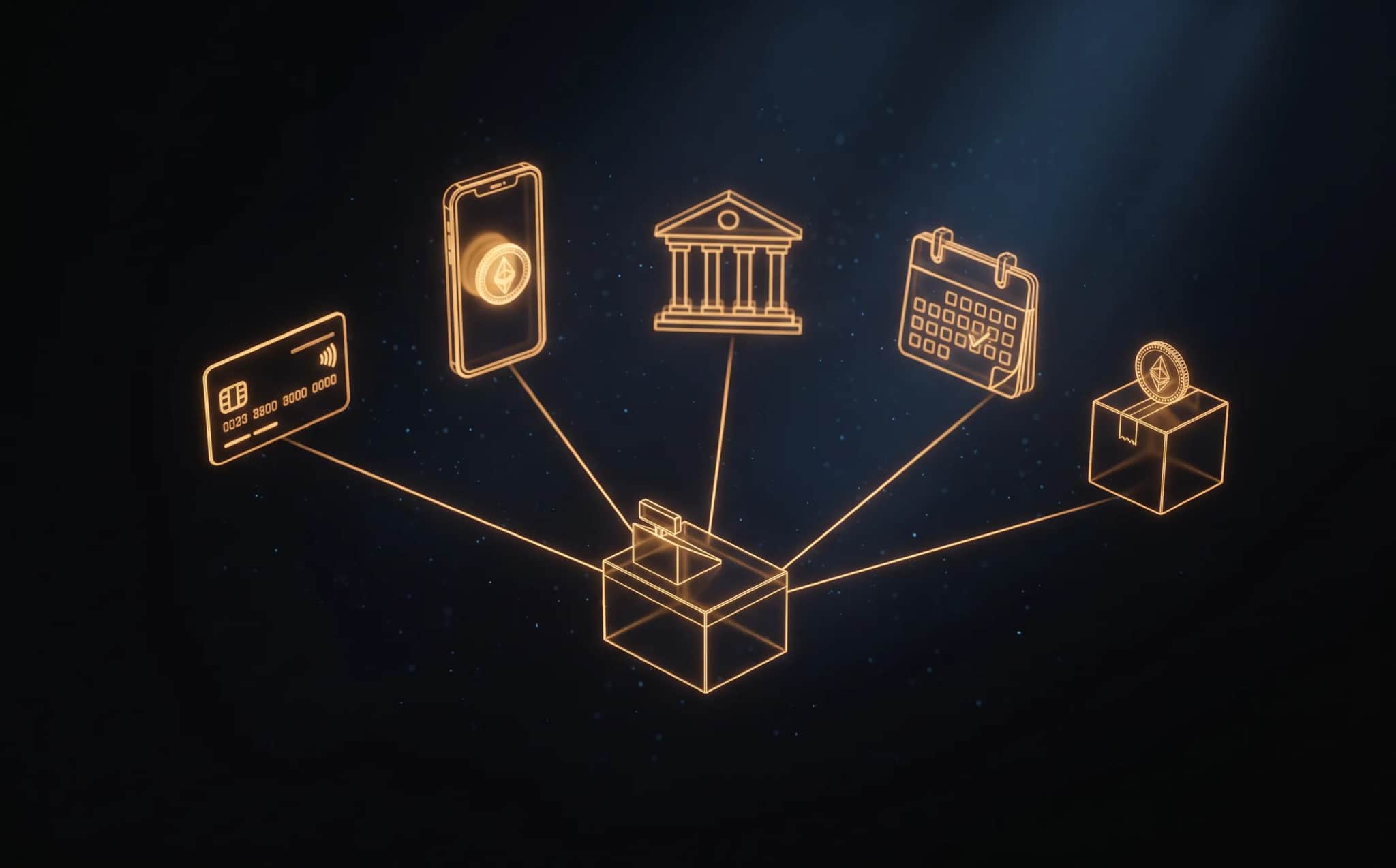
Online payment isn't one service in a store — it's a set of methods: cards, a bank redirect, a wallet on a phone, a buy-now-pay-later option, and in some markets still a cash-on-delivery choice. Each one costs something different, settles on its own timeline, and fails in its own way. And a method a customer wanted but didn't find usually means they finished the purchase somewhere else.
This article goes through the methods one at a time: how each works, what it costs where a rate is published, and what can go wrong on the merchant's side. The full gateway-by-gateway comparison — setup fees, payouts, disputes, negotiation — is in our separate article on payment gateway fees. Here we only cite a rate where it's the thing that actually distinguishes one method from another.
Why the method mix matters
The most quoted figure on cart abandonment is the Baymard Institute average: 70.22% of carts never become an order (baymard.com, updated 22 September 2025). That's not a measurement Baymard itself ran — it's an average across 50 different studies from 2006 to 2025, using different methods. Baymard doesn't publish a separate mobile-only figure, so any "mobile abandonment rate" you see cited elsewhere doesn't come from this source.
The reasons behind the number matter more than the average itself. In Baymard's own survey of US adult shoppers (excluding people who were "just browsing"), 9% said they abandoned because the store had too few payment methods, 19% because they didn't trust the site enough to enter card details, and 10% because their card was declined. The single biggest reason was extra costs at checkout (40%). The limitations are real: this is a US-market study, and the page doesn't give a sample size or survey date. The honest takeaway is qualitative, not a number you can apply to your own store: missing a payment method, and distrust at the point of entering card data, are real reasons people abandon — you can't calculate from this how many orders adding a method would recover for you.
The second reason the mix matters is cost. A payment fee is charged on every order, not once a month — at a few hundred orders, a few tenths of a percentage point or a few cents of fixed fee starts to show up in margin.
Cards and Strong Customer Authentication (SCA)
A card is still the default for customers who don't have a local bank-redirect method set up, and for customers outside your home market. It's also the method where the merchant carries dispute risk: a customer can challenge a transaction with their own bank (a chargeback), and the gateway typically charges a fee to handle it — Stripe's EU page states €20 per lost dispute.
Card fees aren't the same across providers or card types. Stripe's EU page quotes 1.5% + €0.25 for a standard EEA card, rising to 2.8% + €0.25 for a premium EEA card and 3.15% + €0.25 (plus 2% for currency conversion) for a card from outside the EEA. Mollie's equivalent is 1.80% + €0.25 for an EEA consumer card and 2.90% + €0.25 for an EEA commercial card.
Why do these rates run at 1.5–1.8% when card interchange in the EU is capped much lower? Regulation (EU) 2015/751 caps consumer-card interchange — the part of the fee that goes to the card-issuing bank — at 0.2% for debit cards (Art. 3(1)) and 0.3% for credit cards (Art. 4). That's one layer of the fee. Scheme fees and the gateway's own margin sit on top and aren't capped by this regulation, which is why the rate a merchant actually pays runs well above it.
Strong Customer Authentication (SCA). Online card payments in the EU generally require two-factor confirmation from the customer (for example, approval in a banking app). RTS (EU) 2018/389 sets out exemptions that decide how many steps a customer actually sees:
- Remote low-value payments (Art. 16) — up to EUR 30, provided the running total since the last strong authentication doesn't exceed EUR 100 or five consecutive transactions. The commonly repeated "EUR 50" is Art. 11, the exemption for contactless point-of-sale payments, not online checkout.
- Recurring payments (Art. 14) — authentication is required when a series is first set up; later payments in the same series can be exempted.
- Transaction-risk analysis (Art. 18) — exemption thresholds of EUR 500, 250 or 100, depending on the payment provider's own fraud rate.
These exemptions belong to the payment provider and the card issuer, not to the merchant — you choose the gateway, but whether a given customer skips the extra authentication step is decided elsewhere.
No surcharge for regulated cards. Charging extra for paying by card is barred for most payments in the EU. PSD2 (Directive (EU) 2015/2366), Art. 62(4): "Member States shall ensure that the payee shall not request charges for the use of payment instruments for which interchange fees are regulated under Chapter II of Regulation (EU) 2015/751 and for those payment services to which Regulation (EU) No 260/2012 applies." In practice: no surcharge on a consumer Visa or Mastercard, and none on a SEPA euro credit transfer.
Apple Pay and Google Pay — a payment method, or an express checkout
Wallets can be built into a store in two different ways, and the difference decides how much work they actually save a customer.
As a plain payment method. The customer goes through the whole checkout, enters their address and contact details, and at the payment step picks Apple Pay or Google Pay instead of typing a card number. This is how most card gateways offer wallets by default — the customer skips entering card details, nothing else changes, and the fee is the same as for a card.
As an express checkout. An Apple Pay or Google Pay button sits on the product page or in the cart, and the shipping address, e-mail and phone number come from the wallet itself. That's how Stripe's Express Checkout Element works: it supports Link, Apple Pay, Google Pay, PayPal, Klarna and Amazon Pay, and a store can request the shipping address (shippingAddressRequired) and react to it changing — recalculating delivery cost, for instance. Important caveats straight from Stripe's own docs:
- wallets don't pass an e-mail address by default — you have to request it (
emailRequired: true), or you won't be able to send an order confirmation; - the Google Pay button only shows for a customer who already has Google Pay configured, and Apple Pay outside Safari needs extra setup;
- your domain has to be registered with the wallet provider first;
- Stripe's local EU bank-redirect methods (iDEAL, Bancontact and the rest) aren't in this element — they stay on the regular payment form.
Shopify has the equivalent with its accelerated checkout buttons: the customer goes from the product page straight to checkout, skipping the cart. Shop Pay stores the customer's e-mail, payment method and shipping/billing address, and is part of Shopify Payments (help.shopify.com). Shopify's own page claims Shop Pay lifts conversion "by up to 50%" versus a guest checkout — but it doesn't state a sample, markets, or who ran the study, so treat that as a vendor claim, not a result you can expect on your own store.
If your gateway only offers wallets as a plain method, adding Apple Pay and Google Pay won't shorten your checkout form. If you want the shorter path for customers on a phone, you're looking for an express-checkout implementation — and today that depends on your platform and gateway, not just on flipping a switch.
Bank-redirect methods: iDEAL, Bancontact, SEPA Direct Debit
A bank redirect sends the customer to their own bank to confirm the payment, with the amount and payee already filled in — no card number to type. Across the EU, Stripe and Mollie publish rates for several country-specific redirect methods, and for Wero, the newer pan-European instant-payment wallet backed by EPI, which Stripe and Mollie both now list alongside iDEAL as "iDEAL | Wero":
- iDEAL | Wero: Stripe €0.29; Mollie €0.32.
- Wero standalone: Mollie €0.39 in Belgium, 0.90% + €0.25 elsewhere.
- Bancontact: Stripe 1.4% + €0.25; Mollie 1.40% + €0.25.
- SEPA Direct Debit: Stripe €0.35; Mollie €0.35.
- SEPA Bank Transfer: Mollie €0.25.
- EPS (Austria): Mollie 1.50% + €0.25.
Wero itself launched in Belgium, France and Germany in 2024, with the Netherlands and Luxembourg still to come, and its own site describes in-store payments as "soon" rather than live yet (epicompany.eu) — it's worth checking coverage for your customer base before counting on it.
These bank-redirect methods generally don't carry the same chargeback exposure as a card, because the payment is a bank-authorised push rather than a card-network claim the customer can later dispute through their issuer. SEPA Direct Debit works differently again: it's a pull payment, not a push, and the payer can claim a no-questions-asked refund for eight weeks after the debit — though the exact dispute process still depends on your specific gateway's terms.
Buy now, pay later (BNPL)
With BNPL, the customer pays a third party rather than the store directly: the store gets paid up front, and the customer settles later, in full or in instalments.
Klarna, via the gateways we checked: Stripe charges 2.99% + €0.35 for customers in Austria, Belgium, Germany, the Netherlands and Switzerland, 2.99% + €0.40 in the Nordics, and 4.99% + €0.40 for the Czech Republic, France, Greece, Ireland, Italy, Poland, Portugal, Spain, the UK and Romania. Mollie's Klarna rates differ slightly by the same logic: 2.99% + €0.35 for Germany, Austria and Switzerland; 2.99% + €0.45 for the Netherlands and Belgium; 4.50% + €0.35 for France; 4.99% + €0.40 for the Czech Republic, Greece, Hungary, Italy, Portugal, Poland, Romania and Spain. Both rates confirm the same pattern: Klarna's fee is set per country, not per currency area — what you pay depends on where your customer is buying from, not on your own home market.
Billie (B2B BNPL, via Mollie): 3.49% + €0.35. in3 (via Mollie): 3.99% + €0.95.
Whichever provider you pick, the non-payment risk sits with the BNPL company, not with you — you get paid up front either way. What varies is the fee, and whether the specific rate your gateway quotes you matches the country your customer is actually buying from.
Cash on delivery — a mechanism, not an EU price list
Pay-on-delivery is the one common method where the store ships the goods before it has the money: the carrier collects payment from the customer and remits it to the merchant later, which means an uncollected parcel costs the merchant twice — once to ship, once to return.
We looked for an EU-wide tariff for this and didn't find one, and that's a correct result rather than a gap in our research: Regulation (EU) 2018/644 only requires parcel operators to publish their single-piece tariffs to national regulators, with the Commission collating them once a year (Art. 5); it says nothing about negotiated business-contract rates, which is what COD fees for a store typically are. There's no EU-wide price list to quote, by design. If cash on delivery matters to your market, the national carrier's own business price list is the only reliable source — we cover specific carrier numbers for cross-border shipping in our e-commerce shipping article.
Payment methods on a SaaS platform
What a payment method costs also depends on whether you use the platform's own payments product or connect a separate gateway. We cover the full Shopify/WooCommerce comparison — including Shopify's third-party-gateway surcharge of 2% / 1% / 0.6% / 0.2% across its Basic/Grow/Advanced/Plus plans — in payment gateway fees, to avoid repeating the same numbers in two places. The short version for the methods covered here: Shopify Payments' EU rates include iDEAL at 2.2%/1.9%/1.6%/1.4% + €0.25 and Klarna at 4.99% + €0.35 (3.99% on Plus) — both cheaper, by plan, when run through Shopify's own gateway than through a connected third party once the surcharge is added.
Choosing methods, cost and risk together
The table below shows each method's cost at an example €100 order (illustrative, using the published rate from the provider named — your own gateway may quote differently), and the risk it carries for the merchant.
Method | Cost at €100 (example) | What can go wrong | Best for |
|---|---|---|---|
Card (Stripe EEA) | €1.75 | chargeback and dispute fee (€20 at Stripe) | international customers, subscriptions |
SEPA Direct Debit | €0.35 | settlement can take longer than an instant method | recurring and B2B payments |
iDEAL | Wero | €0.29 | limited to markets where the scheme is live | customers in iDEAL/Wero countries |
Bancontact | €1.65 | limited to Belgian customers | Belgian market |
PayPal (Germany rate) | €3.38 | buyer-protection disputes; no EU dispute-fee figure confirmed | customers who already trust PayPal |
Klarna (BNPL, Stripe, core markets) | €3.34 | none for the merchant — Klarna carries the non-payment risk | higher-value baskets |
{{chart:6abe3819eaf38b8f030aa33a|Payment methods: cost at a €100 order and merchant risk|Matrix of six payment methods. Horizontal axis: cost to the merchant for a €100 order at the published rate (illustrative, not a market average). Vertical axis: type of risk for the merchant (editorial judgement based on the mechanism, not a measurement). Card via Stripe EEA: €1.75 (1.5% + €0.25), medium risk — chargeback and a €20 dispute fee at Stripe. SEPA Direct Debit via Stripe: €0.35, medium risk — a pull payment, and the payer can claim a no-questions-asked refund for eight weeks after the debit. iDEAL \| Wero via Stripe: €0.29, low risk — bank-authorised push payment, limited geographic coverage. Bancontact via Stripe: €1.65 (1.4% + €0.25), low risk, limited to Belgian customers. PayPal, Germany rate: €3.38 (2.99% + €0.39), medium-to-high risk — buyer-protection disputes, no EU dispute fee confirmed. Klarna BNPL via Stripe, core markets: €3.34 (2.99% + €0.35), low risk for the merchant — Klarna carries the non-payment risk and the merchant is paid up front.|Digital Vantage worked example from Stripe, Mollie and PayPal pricing pages, read 30 September 2026}}
How to put this together for your own store:
- Start with cards and at least one bank-redirect method relevant to your customers — iDEAL and Bancontact if you sell into the Netherlands and Belgium, SEPA Direct Debit for recurring billing.
- Add Apple Pay and Google Pay if your gateway supports them, but check whether you're getting a plain payment method or a genuine express checkout with the address pulled from the wallet — that's what decides whether a phone customer gets a shorter path.
- Turn on BNPL once your average order justifies it — compare the direct Klarna-style rate against your gateway's rate, and don't promise customers a flat "always free" if the fee tier depends on their country.
- Treat cash on delivery as a national decision, not an EU-wide one — there's no EU price list for it, and the merchant risk is the uncollected parcel, not the fee itself.
- On a SaaS platform, add the platform's surcharge before comparing gateways — see payment gateway fees for the Shopify numbers.
- Check settlement timing with your own provider. We could not confirm a single EU-wide payout schedule for any gateway in our source set; ask for your account's specific terms.
To run these costs together with subscription, hosting and maintenance costs over several years, use our e-commerce TCO calculator or the online store cost calculator. If you sell on a marketplace as well, marketplace integration explains how payment handling changes there.
FAQ
Frequently asked questions about online payment methods
Start with cards and at least one relevant bank-redirect method — iDEAL and Bancontact for the Netherlands and Belgium, SEPA Direct Debit for recurring payments. Add Apple Pay and Google Pay where your gateway supports them, and consider BNPL once your average order justifies it. Rates for the methods we checked (30 September 2026) range from under €0.30 for a bank-redirect method to around 1.5–3% plus a fixed fee for cards, and up to around 5% plus a fixed fee for BNPL in some markets.
SCA is the two-factor confirmation EU card payments generally require online. RTS (EU) 2018/389 sets exemptions: up to EUR 30 for a low-value remote payment (Art. 16), subject to a EUR 100 or five-transaction cumulative cap; EUR 100/250/500 tiers under a provider's own risk analysis (Art. 18); and, for a recurring series under Art. 14, authentication at set-up with an exemption for the same-amount payments that follow. The often-cited EUR 50 is the point-of-sale contactless exemption, not the online one.
Only if they're implemented as an express checkout, where the shipping address, e-mail and phone number come straight from the wallet — as with Stripe's Express Checkout Element or Shopify's accelerated checkout. If your gateway only offers the wallet as a plain payment method, the customer still fills in the rest of the checkout form and only skips typing a card number.
The store gets paid immediately by the BNPL provider; the customer settles with that provider later, in full or in instalments. The merchant doesn't carry the non-payment risk. Klarna's rate via Stripe runs from 2.99% + €0.35 in its core markets (Austria, Belgium, Germany, the Netherlands, Switzerland) up to 4.99% + €0.40 in markets where BNPL is newer, including France, Italy, Poland and the UK.
Want to match your payment methods to your actual customers?
We'll help you choose the methods and the provider on your own numbers — basket size, order volume, platform — before you sign anything.
Related Posts
- Payments and logistics in e-commerce — what fulfilling one order really costs
Payments and logistics in e-commerce: payment fees, shipping, packaging and returns per order under EU rules — and where no EU-wide price list exists.
- 1.One Stop Shop VAT and Selling Across the EU
The EU One Stop Shop: the EUR 10,000 EU-wide threshold, quarterly VAT returns, VAT rates by country, packaging registries, and the customer's own consumer law.
- 2.EU Right of Withdrawal: Returns and Guarantees in Online Stores
The EU right of withdrawal: the 14-day deadline, the model withdrawal form, refunds, the 2026 withdrawal button, and the two-year legal guarantee.
- 3.Ecommerce Shipping in the EU — Parcel Lockers, Volumetric Weight and Price Rules
There is no EU-wide shipping price list: Regulation 2018/644 sets transparency rules, and volumetric weight can double your shipping bill.
- 4.Payment Gateway Fees for Online Stores — Stripe, Mollie, Adyen and PayPal Compared
Payment gateway fees in the EU: Stripe, Mollie, Adyen and PayPal rates, interchange caps, the card-surcharge ban, SCA and Shopify's third-party gateway fee.
- 5.Selling on EU Marketplaces — Amazon, eBay and Marketplace API Integration
Amazon's EU referral fees, eBay.de's per-order charges, and how marketplace integration works, with Allegro as a worked API example.
- 1.
About the Team
Digital Vantage Team
Your Partner in Business, Digital Vantage Team
Digital Vantage team is a group of experienced professionals combining expertise in web development, software engineering, DevOps, UX/UI design and digital marketing. Together we carry out projects from concept to implementation - websites, e-commerce stores, dedicated applications and digital strategies. Our team combines years of experience from technology corporations with the flexibility and immediacy of working in a smaller, close-knit structure. We work in agile methodologies, focus on transparent communication and treat each project as if it were our own business. The strength of the team is the diversity of perspectives - from systems architecture and infrastructure, frontend and design, to SEO and content marketing strategy. As a result, the client receives a cohesive solution where technology, aesthetics and business goals go hand in hand.