Website
Wieczorek Stępień
Professional ethics as information architecture
What a law firm's website looks like when it starts from a discovery brief instead of a template
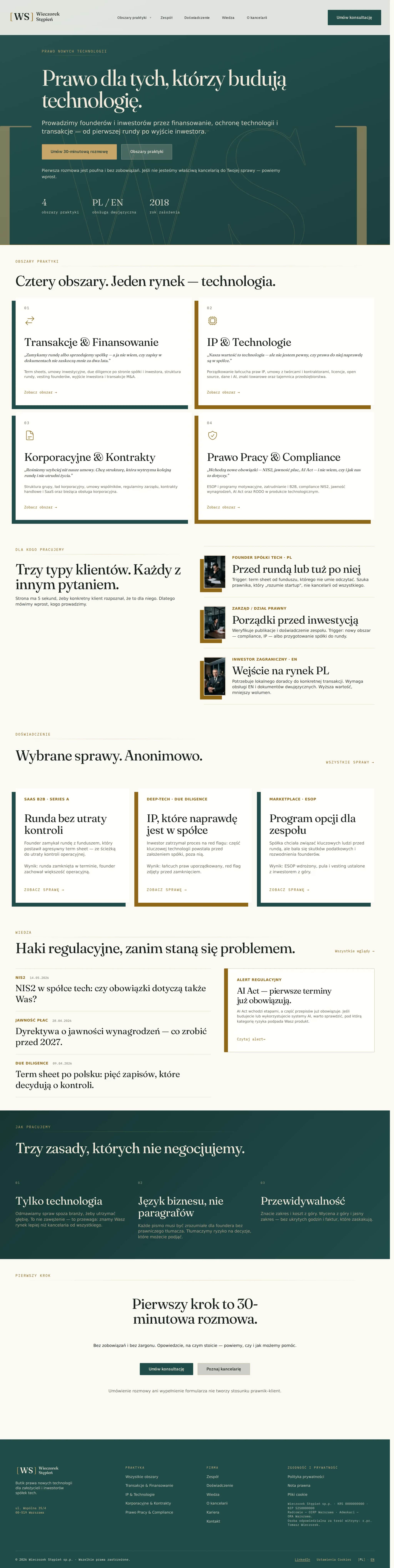
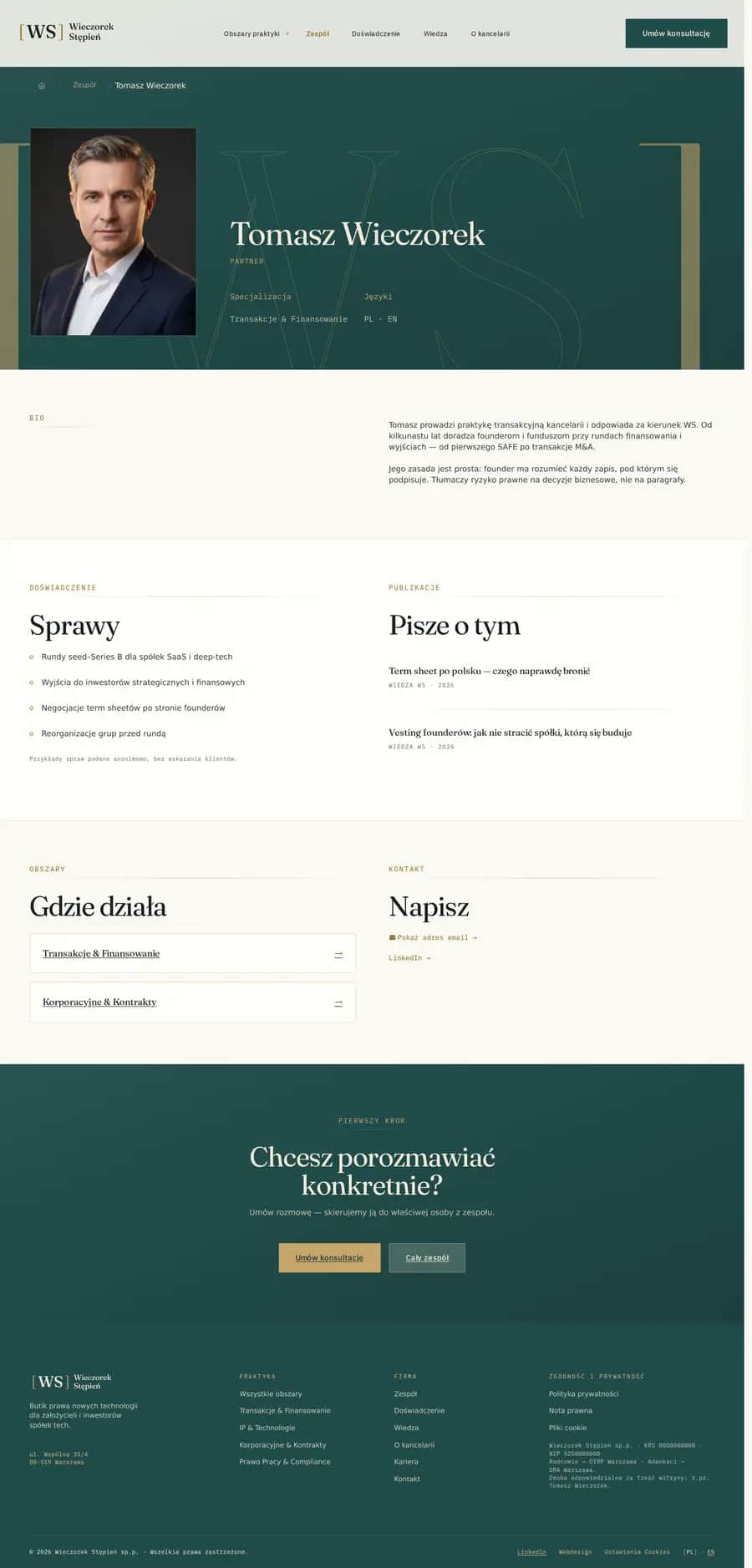
A demonstration project with a fictional brand and fictional data. A reference build for a boutique law firm, made the Digital Vantage way: discovery brief → brand tokens → information architecture → wireframes → copy → delivery. The case shows the method and the design decisions, not another firm's result — and it has to be labelled that way.
35 PL / 35 EN
Full language mirror, zero Polish-only pages
- Client
- Wieczorek Stępień
- Year
- 2026
- Tech stack
- Next.js 16 · Payload CMS 3 · React 19
- Timeline
- ~5 weeks (on the existing Digital Vantage platform)
- Location
- Warsaw (fictional)
- Live version
- kancelaria.dvn.dev
01Context
Challenge
The model client is a technology-law boutique where roughly 70% of clients arrive by referral — and then verify the firm online. The problem is not "we have too few leads"; it is that a website built by a friend of a friend costs 20–30% of the trust the client already had. On top of that sit the 5–15 seconds in which a founder, in-house counsel or investor has to recognise this as the firm for them, or leave.
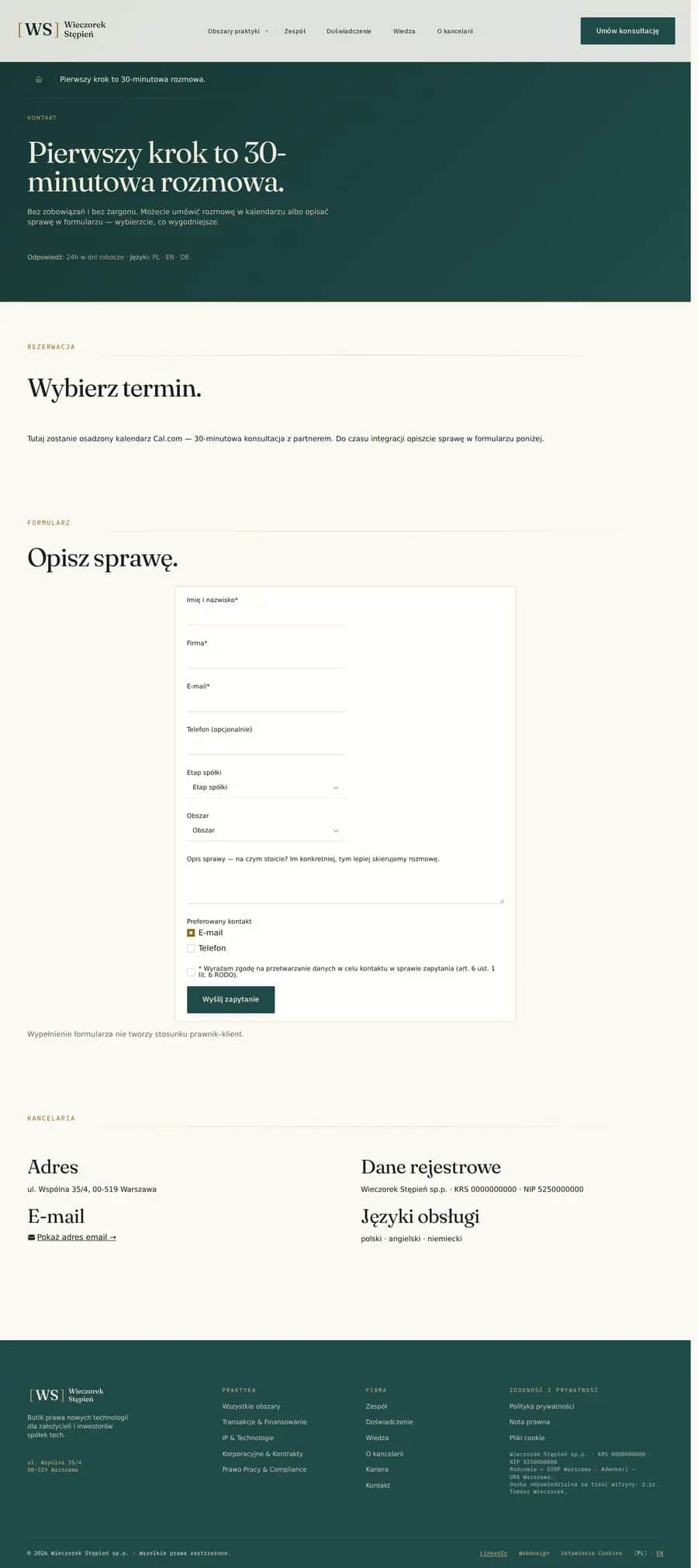
The constraints shape everything: professional ethics (no superlatives, no comparisons, no promises of outcome), no consent for references (experience fully anonymised), and a complete PL/EN mirror as a precondition for a foreign investor. For us the second challenge was a portfolio with no work in the B2B boutique segment — and that client buys the conviction that you understand their constraints before you start designing.
02Solution
Approach
We started with a discovery brief rather than a moodboard: a reference document in which every question carries a "why we ask" and "what a good answer looks like" layer, with a section on ethics and GDPR that cannot be skipped — because the lawyer, not the studio, is accountable for what a legal website says. The identity was delivered as a token file ready to plug in, not as a PDF brand book.
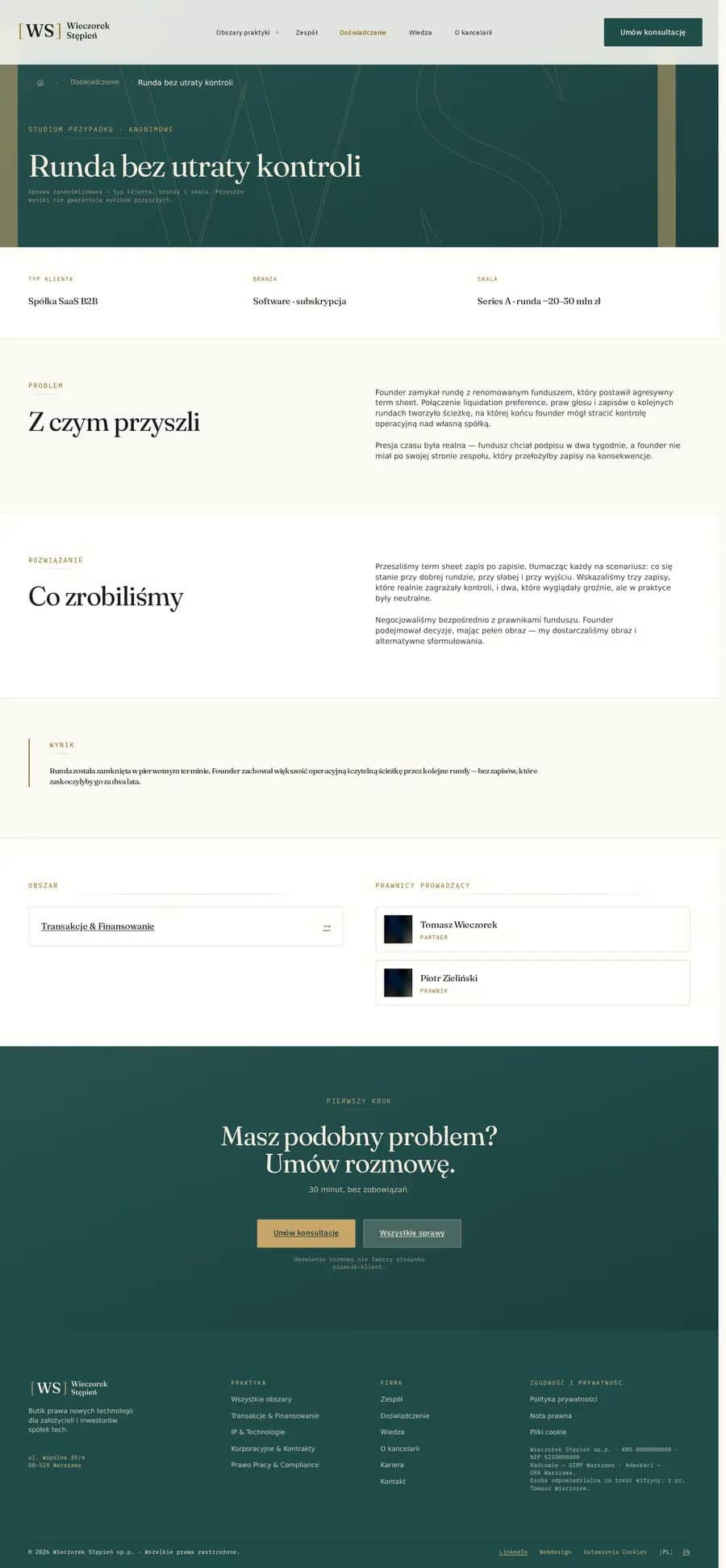
The information architecture is a contract: every node has a purpose, an audience, sections, CMS fields and caching rules, which is why the wireframes drew themselves from it without a round of rescoping. The copy was written under the ethical constraints: instead of superlatives there is a "who we do not work with" section, because that is the only verifiable differentiator the rules allow.
03Proof
Results
35 PL / 35 EN
Full language mirror, zero Polish-only pages
132–276 ms
LCP on the measured paths
0
CLS — every path
~80 kB
Page weight over the wire
144
End-to-end tests
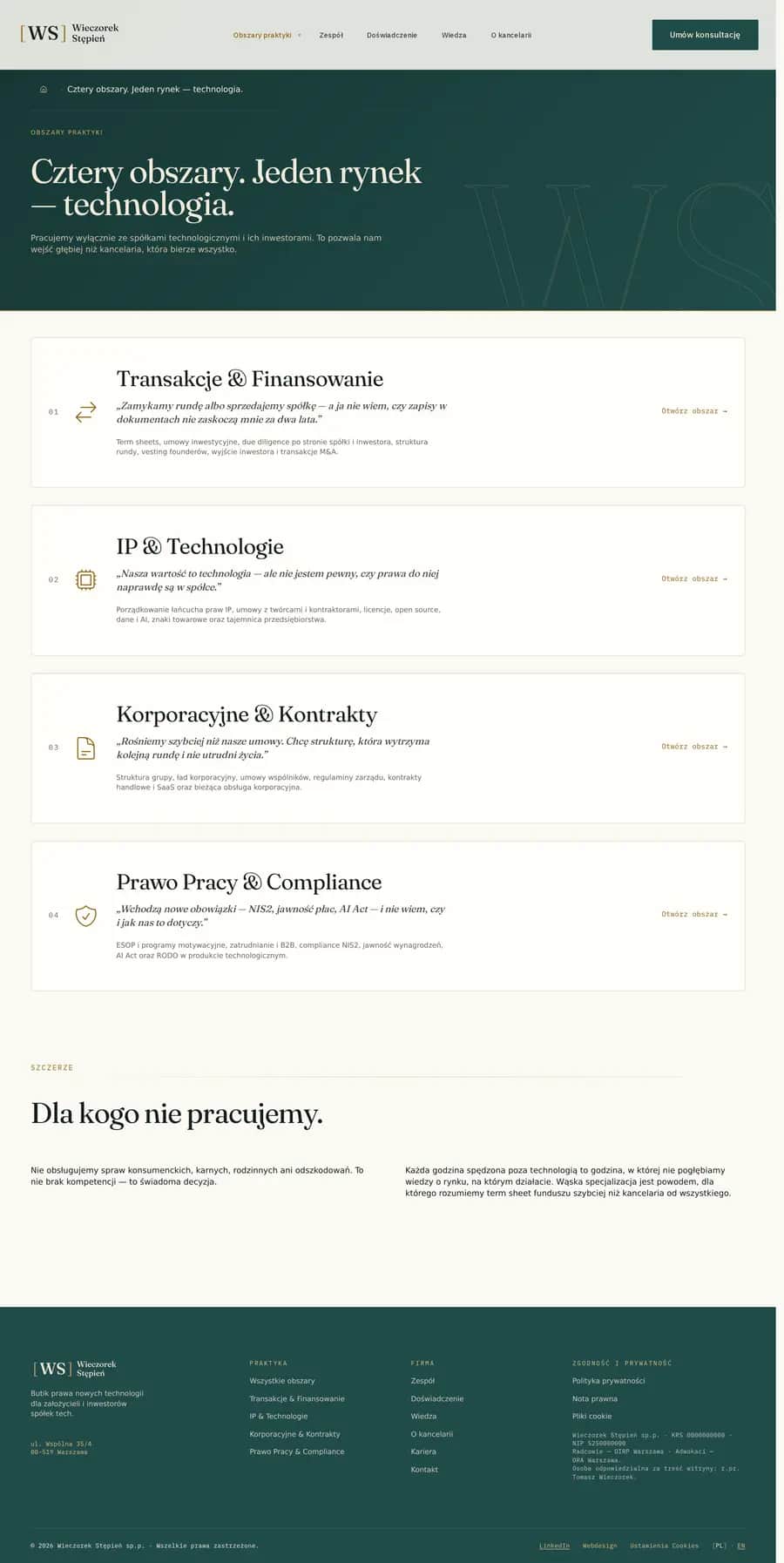
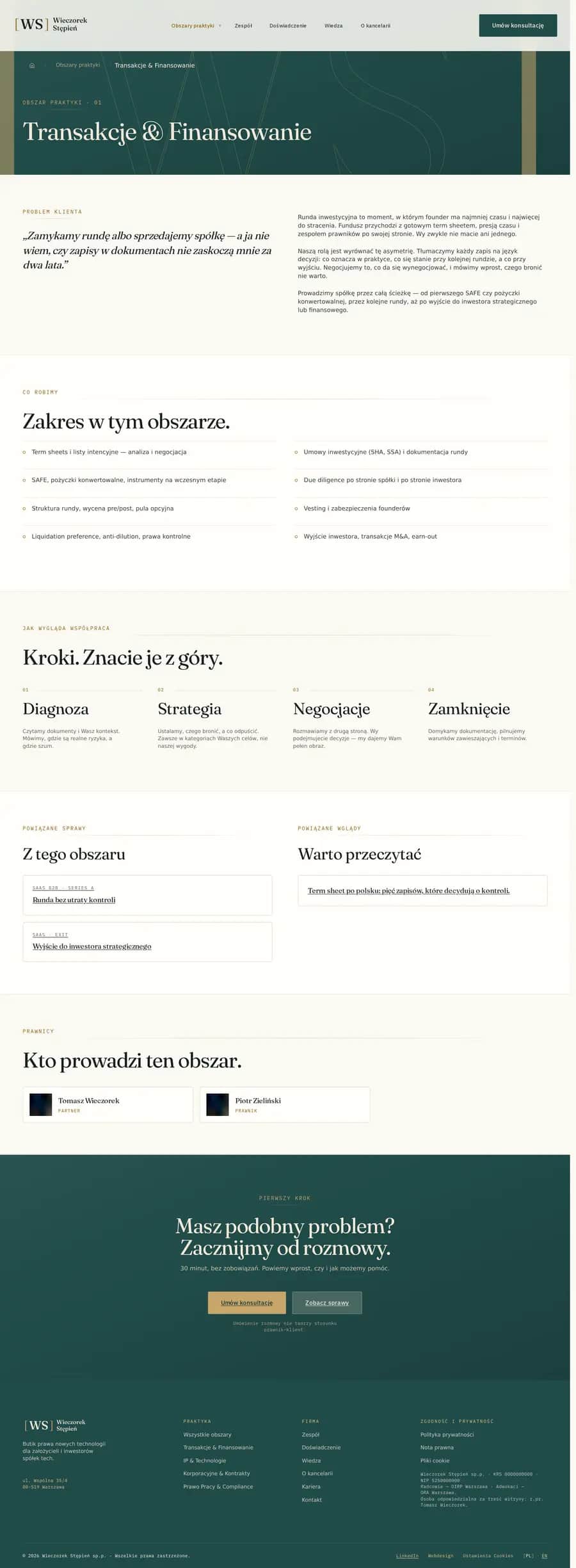
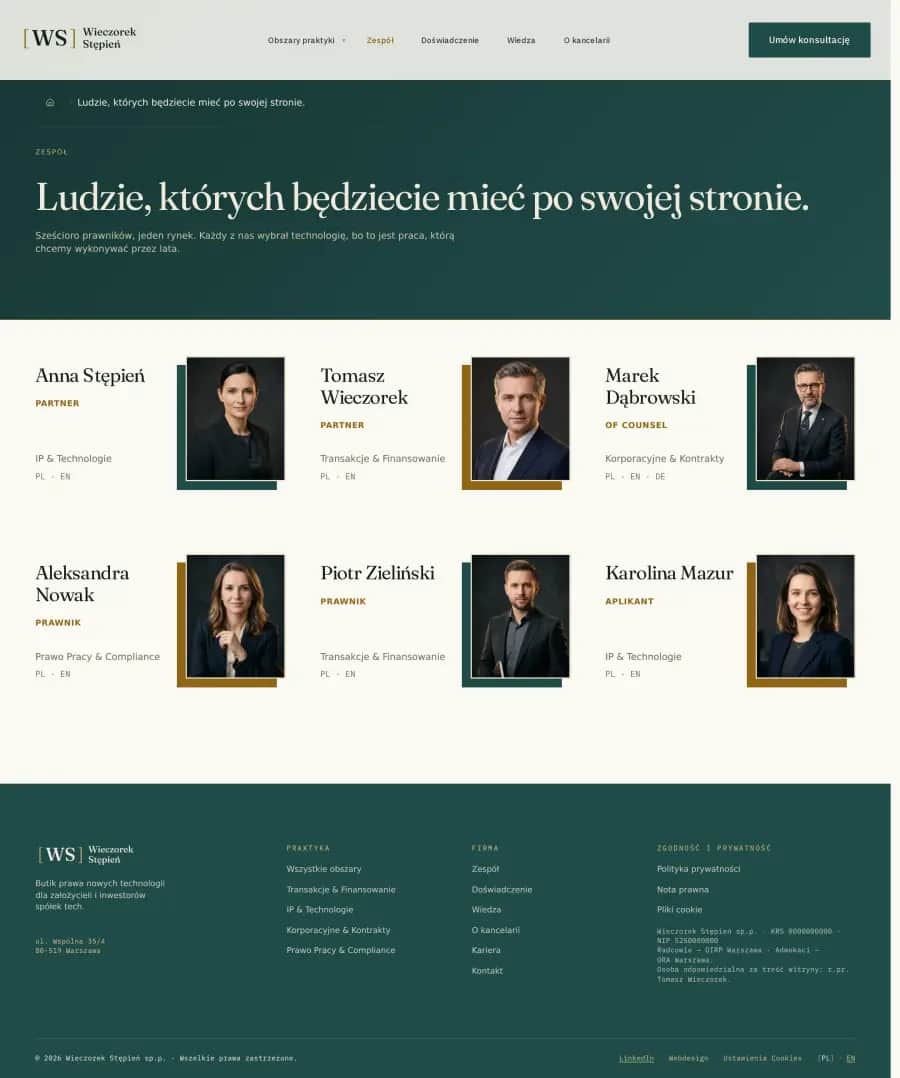
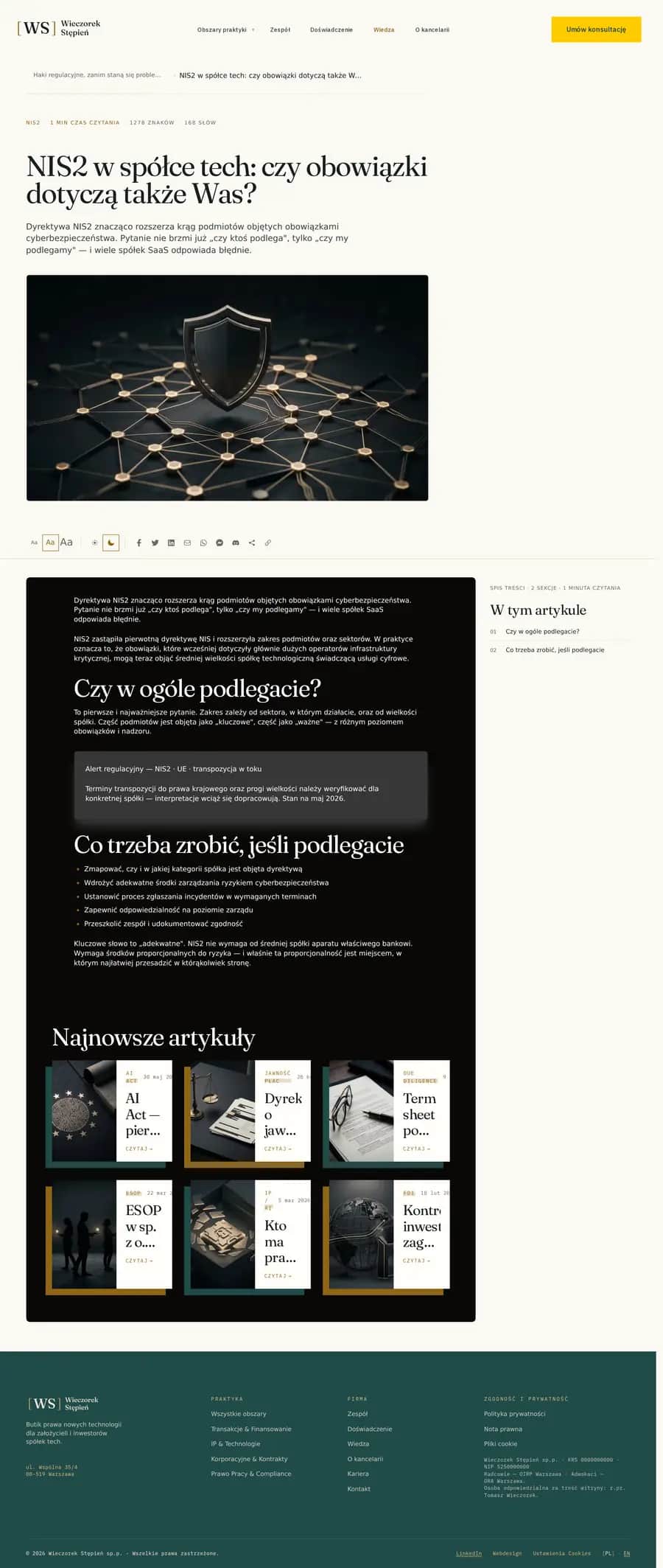
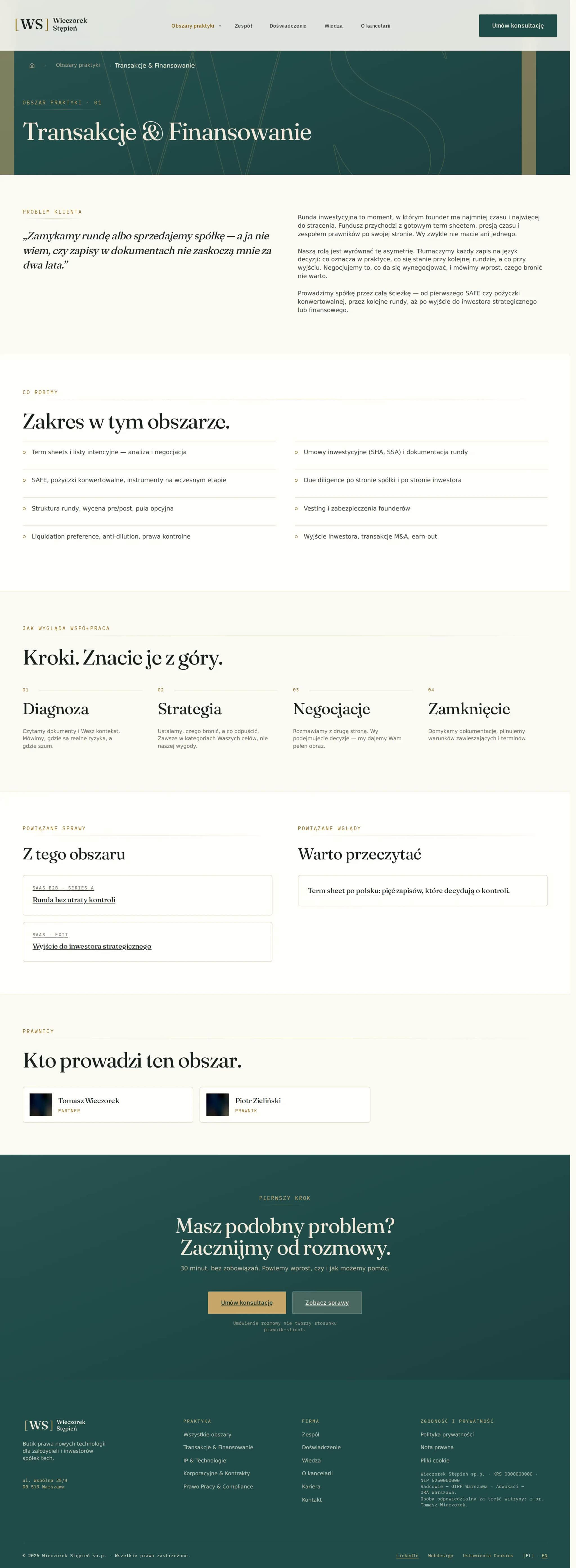
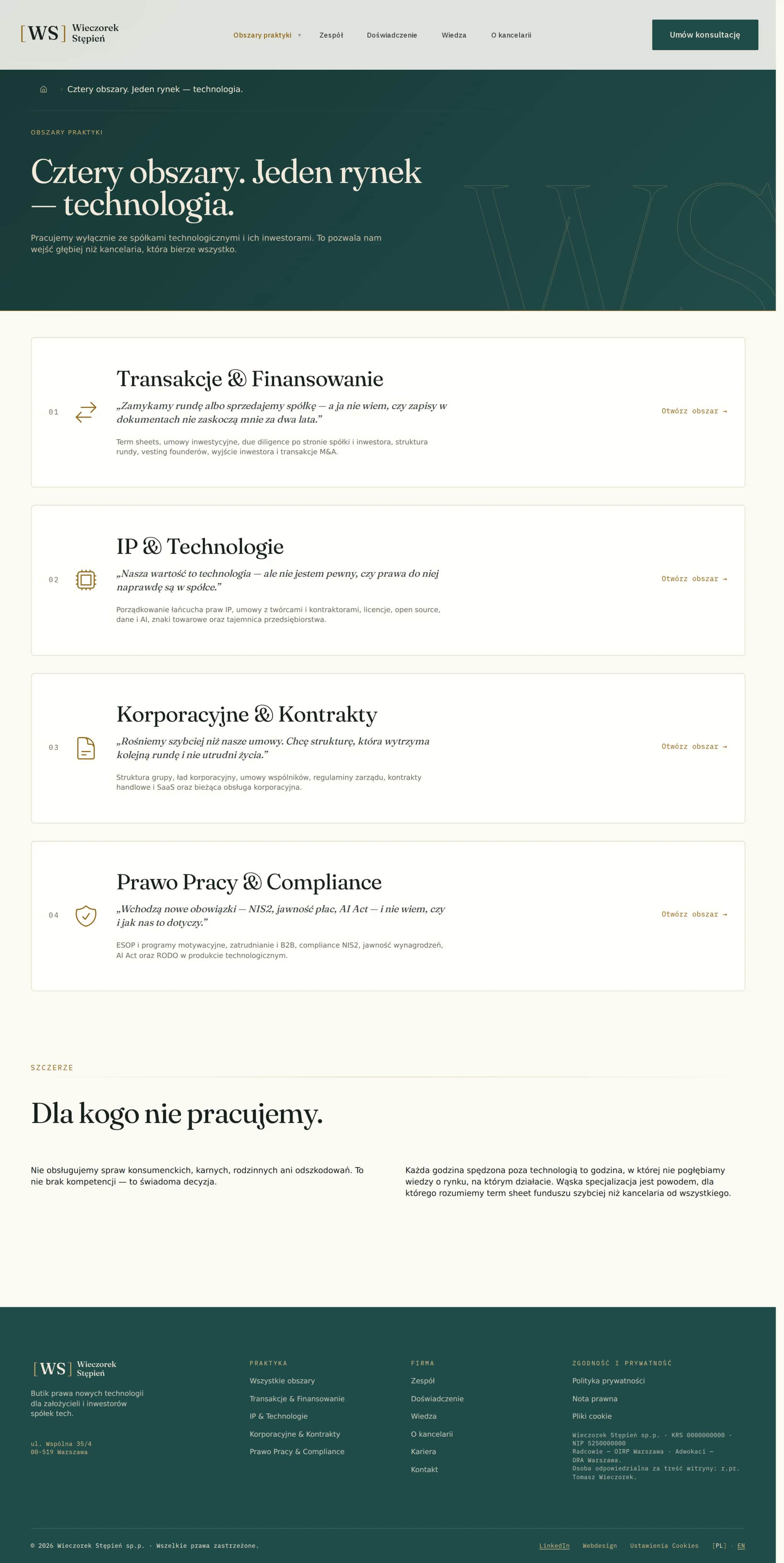
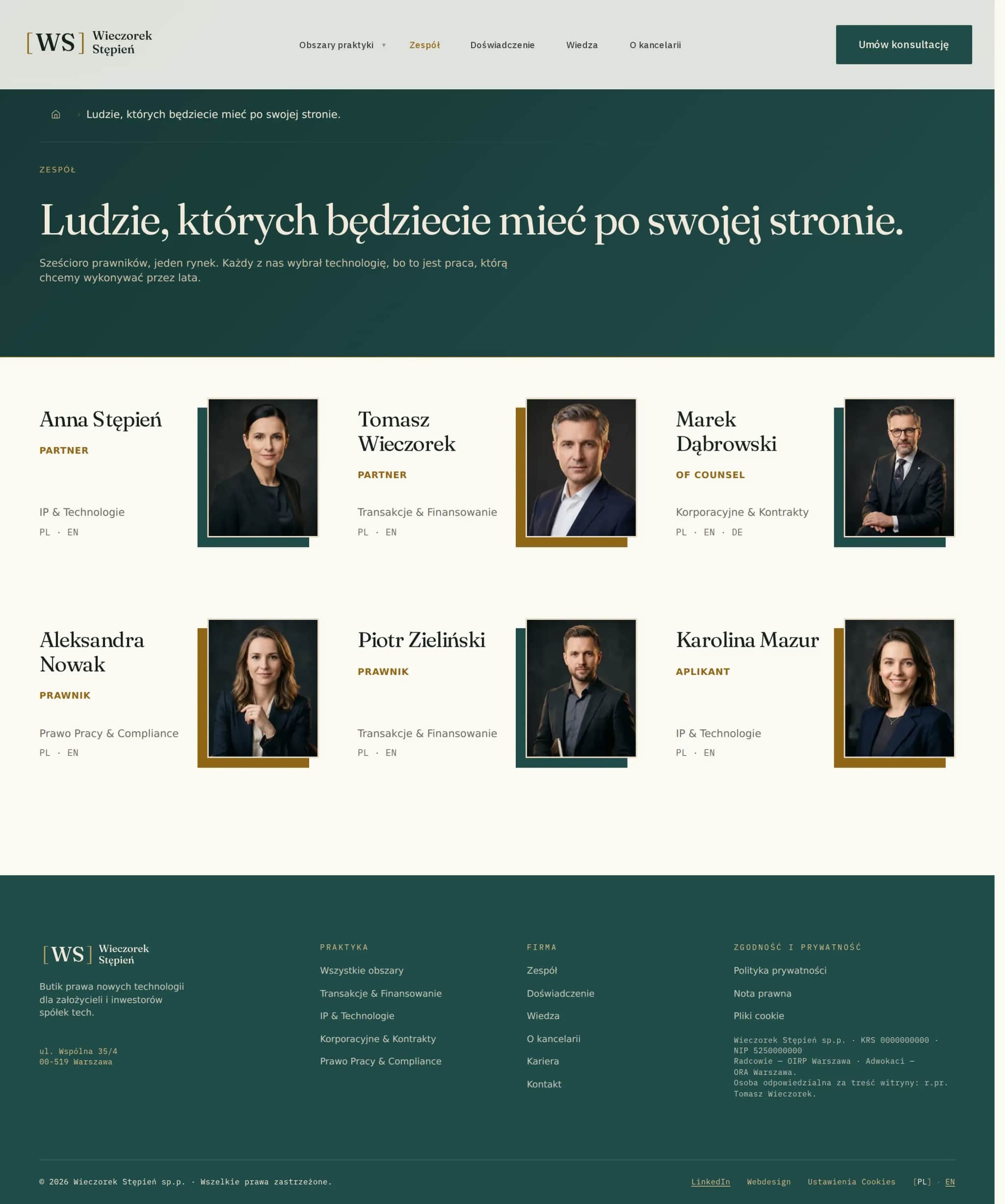
The site runs as a full language mirror — 70 URLs in a 35 PL / 35 EN split, with not one Polish-only page, which is a hard test of the architecture rule rather than a claim of "we have two languages". Four practice areas, six lawyer profiles and six anonymised case studies, each in both languages. The site is fast and static (CLS = 0, ~80 kB over the wire).
The methodological value — architecture as a ready skeleton for wireframes, tokens that plug in without interpretation — is a claim to be confirmed on the next delivery, and we describe it as exactly that. Three design decisions did not survive contact with the code; that discrepancy is reported as material rather than swept away. Note: this demo needs a clear "demonstration material" label before it sits next to client work.
A complete reference build for a boutique law firm: brief → tokens → architecture → wireframes → delivery, a PL/EN mirror with no Polish-only pages.
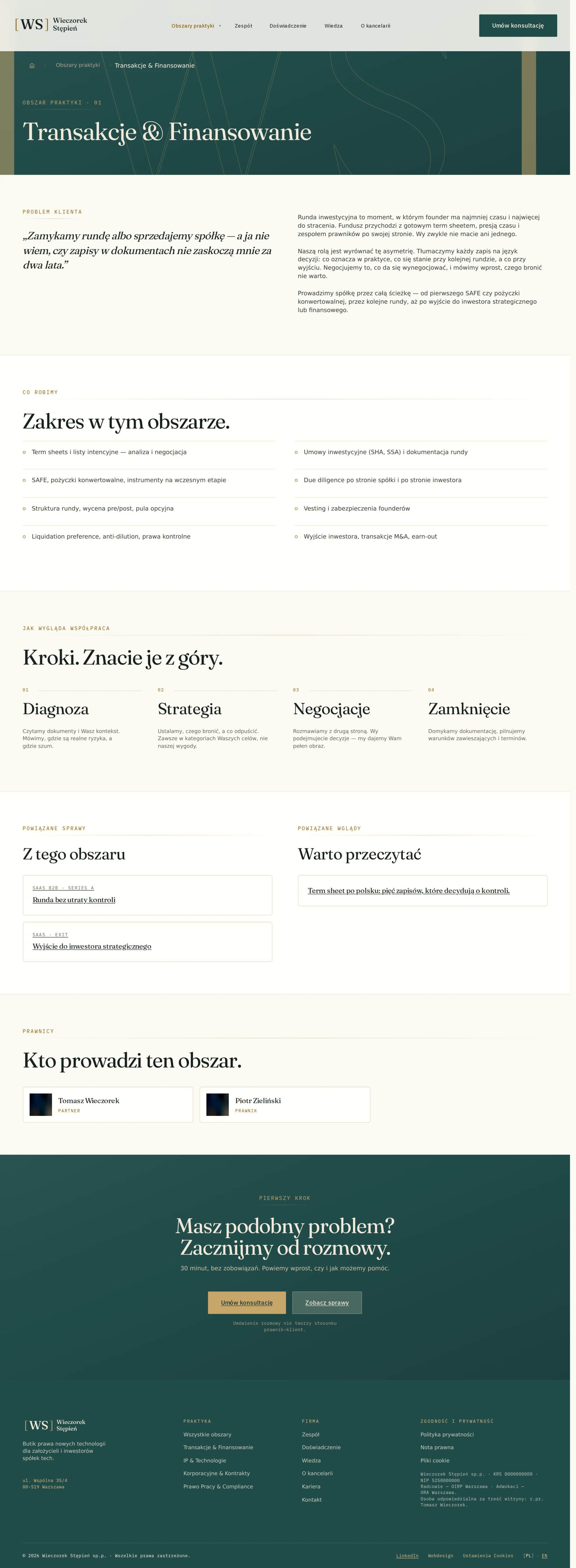
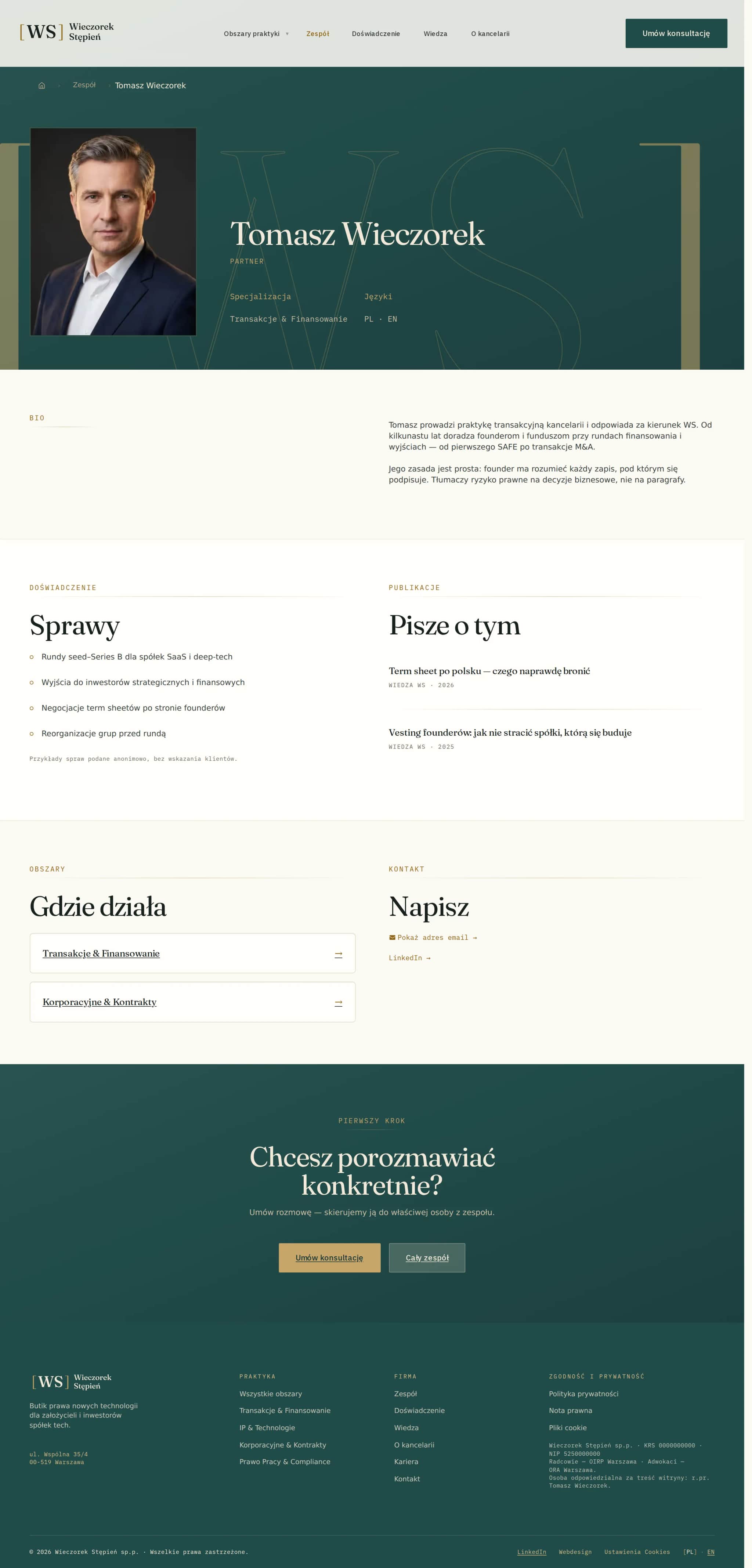
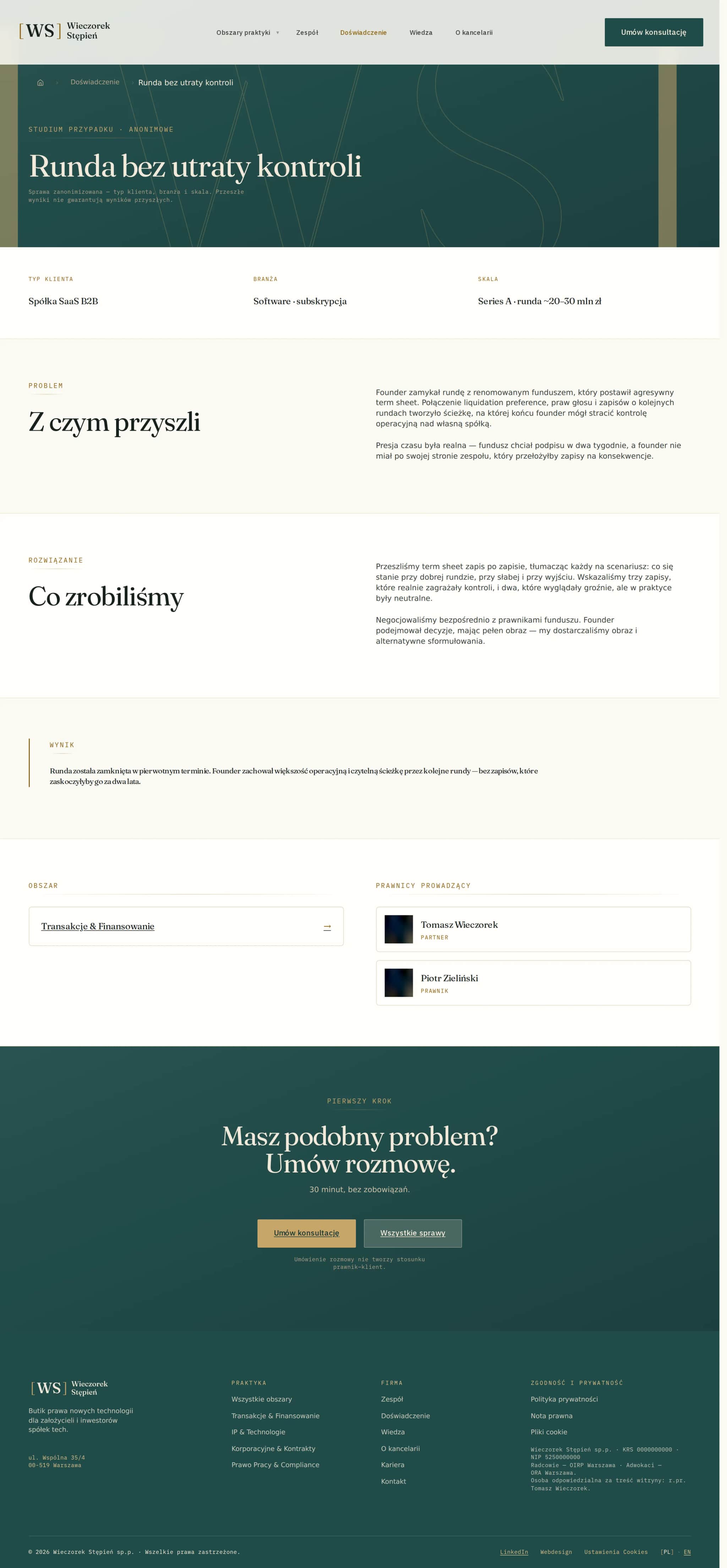
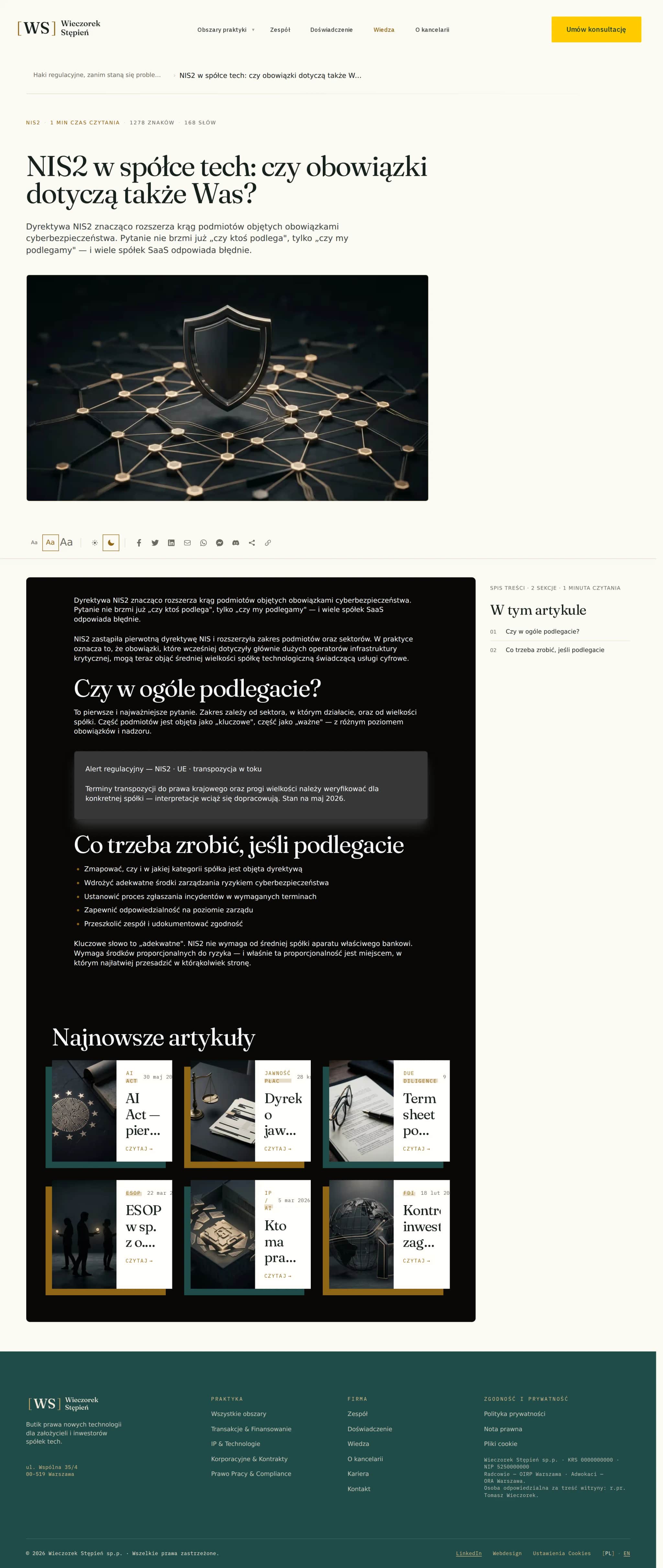
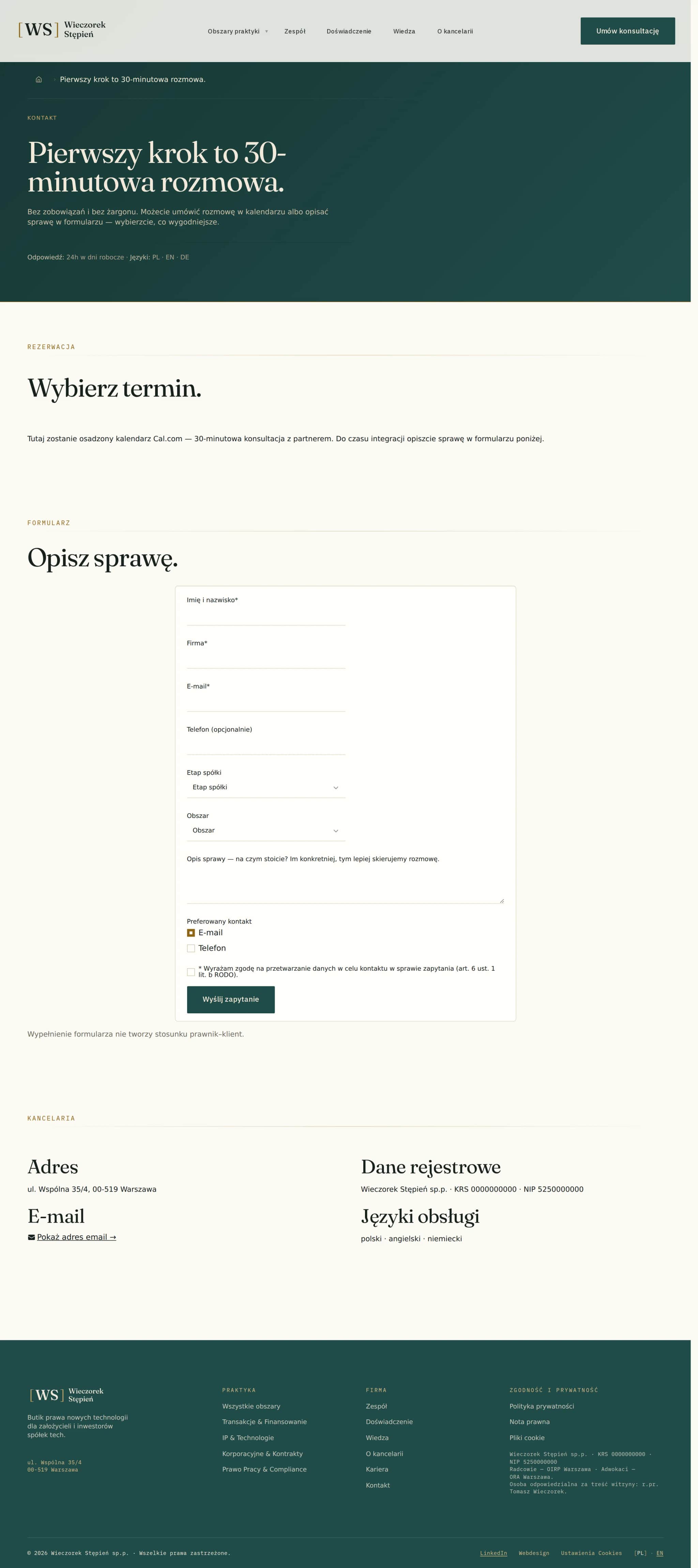
Desktop and mobile
Gravity that survives a small screen
A law firm has to inspire confidence on an office monitor and on a phone in a waiting room — the practice-area hub and the contact form with its GDPR notice read equally soundly on both.

Tech stack
- Next.js 16
- Payload CMS 3
- React 19
- MongoDB
- Tailwind CSS
- Figma
YOUR PRACTICE
Need a website that builds trust?
I will design a site that communicates your expertise and brings in specific enquiries.