UX/UI designCost of websitesUX Best PracticesUX of web applicationsWeb application technologiesSoftware Development13 min czas czytania18 658 znaków2541 słów
What is UX/UI design and how to implement it?
Learn what UX/UI design is and how to improve usability and site design to increase conversions and user engagement.
Redakcja Digital VantageYour Partner in Business, Digital Vantage Team · Digital Vantage team is a group of experienced professionals combining expertise in web development, software engineering, DevOps, UX/UI design and digital marketing. Together we carry out projects from concept to implementation - websites, e-commerce stores, dedicated applications and digital strategies.
Our team combines years of experience from technology corporations with the flexibility and immediacy of working in a smaller, close-knit structure. We work in agile methodologies, focus on transparent communication and treat each project as if it were our own business.
The strength of the team is the diversity of perspectives - from systems architecture and infrastructure, frontend and design, to SEO and content marketing strategy. As a result, the client receives a cohesive solution where technology, aesthetics and business goals go hand in hand.
Publikacja
Aktualizacja
What do you find in the article?
- The difference between UX and UI - Wondering why it's important to understand the differences between UX and UI? It can increase conversions on your site by up to 200%. For example, improving the intuitiveness of navigation can significantly improve the user experience.
- step-by-step design process - What does the design process look like, from user research tohanding over the project to programmers? Discover a detailed action plan with guidelines and timelines for each phase.
- The 5 costliest entrepreneurial mistakes - Avoiding common UX/UI design mistakes can save you from losing up to 40% of your customers. For example, suboptimal registration forms can drive users away.
- Criteria for selection of the project team - How to choose the right design team? Here you will find questions to ask agencies and freelancers, as well as a cost comparison of different forms of cooperation.
- ROI metrics from design investments - How to measure the return on investment of UX/UI? Learn how to use specific business metrics to evaluate the effectiveness of your project.
Introduction - why UX/UI is the foundation of your online business success
Imagine that more than 75% of users judge the credibility of your company based on the appearance of your website. That's no coincidence. UX/UI design is now a key element in determining success in online business.
User Experience (UX)is the entire experience a user has when using a digital product. It encompasses everything from the first time the user enters the site to the completion of the purchase. The **User Interface (UI)**, on the other hand, is the visual and interactive layer of the product, which includes colors, fonts, buttons or animations.
You can compare it to a house: the UX is its architecture, and the UI is the interior design. You can have a beautifully decorated living room, but if the hallway leads nowhere, the whole house will be impractical.
The statistics here are very telling. Companies that invest in UX can expect an average return on investment of **9400% ROI**. For example, Amazon increased its revenue by $2.7 billion by redesigning its payment process. Every dollar spent on UX brings an average of $100 in profit.
Good design is more than just aesthetics. It's a powerful strategic tool. A pretty website may catch the eye, but it's thoughtful UX/UI that will make a user stay on the site, make a purchase and return. It's like the difference between a beautiful store and its functionality - you can have a stylish interior, but if customers can't find the checkout or products, the business won't survive.
In this article you will find practical tips on the entire UX/UI design process. You will learn how tomanage the project, avoid costly mistakes and how to choose the right team. Above all, you will understand why investing in good design is not a cost, but an investment in the growth of your business.
What UX and UI design actually is - the basics for business
Think of UX design as the work of an architect, and UI as the task of an interior decorator. Both are crucial, though each requires different skills.
User Experience (UX) - experience design
UX designer is like a detective in the digital world. His or her job starts with asking questions. Who are your users? What problems do they face? What do they really need?
User research is the basis of the whole process. It's not guesswork. The designer conducts interviews, analyzes data, and creates personas, or fictional characters representing real customers. An example? "Anna, 34, manager, shops online in between meetings."
Customer journey mapping is a map of the customer journey, from the first visit to the site to after-sales service. The designer marks every point of contact. Where can a user get lost? Which steps are unnecessary?
Information architecture is a logical arrangement of content. Where to put the menu? How to name the categories?Wireframing are sketches of the screens - no colors or photos, just a clean layout of the elements.
Usability testing verifies ideas. Real people test prototypes, which allows you to quickly spot problems that the designer may have overlooked.
User Interface (UI) - interface design
A UI designer takes the skeletons created by UX and dresses them in an attractive garment. But it's not just decoration. Each element has its own business significance.
Design system is a set of visual rules. What does a button look like? Which colors signify success and which colors signify error? Visual consistency builds trust.
Typography and color scheme affect brand perception. A serious bank will use different fonts than a creative agency. Colors evoke emotions - red can alarm, while blue can soothe.
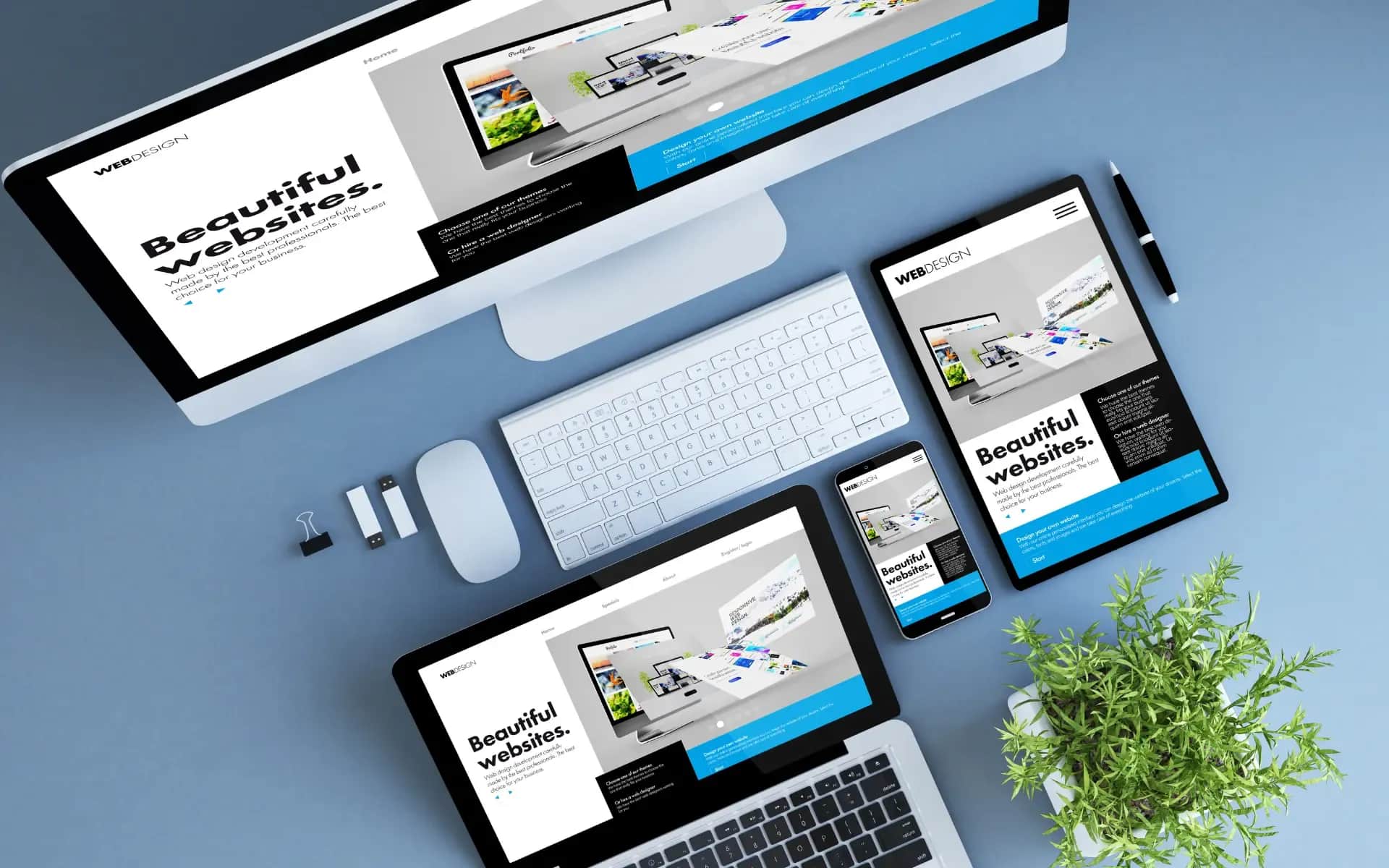
Responsiveness means adaptation to different devices. Your website must work on phone, tablet and computer.Availability is design with everyone in mind, including people with disabilities.
Microinteractions are small animations during clicks or scrolls that add fluidity and inform the user about the system's response to his actions.
Good design combines both. UX without UI is a skeleton without a skin, and UI without UX is a beautiful facade without a foundation.
Step-by-step UX/UI design process
Creating a good design is a process that takes time and precision. It can be compared to building a house: first we lay a solid foundation, then we erect the walls, and finally we take care of the finishing details.
Research and strategy phase
Every project begins with a fundamental question: why are we doing this?Business analysis allows you to set goals. Maybe you want to increase sales by 30% or reduce the number of abandoned shopping carts? Specific goals will guide all subsequent design decisions.
The heart of the whole process isuser research. Designers use a variety of methods. In-depth interviews uncover motivations, surveys collect hard data, and observations show how users actually behave - not always as declared.
Tools like Google Analytics can reveal traffic patterns, and Hotjar shows where users are clicking. However, the most can be learned from direct conversations with customers. An hour spent with a real user can be more valuable than a week of analyzing charts.
Competitor benchmarking is a way to understand industry standards. It's not about copying, but about asking yourself: why did the competition do it this way and not that way? What problems did they solve? What can we do better?
At the end of the research phase, adefinition of functional requirements. It's a list of features with specific priorities. What is essential and what is a nice addition? This document will be our compass throughout the project.
Conceptual phase
User flows are road maps in a digital world. Each user path has a beginning and a destination. Registering a new account, adding a product to a shopping cart or resetting a password - the designer draws every possible scenario.
Sitemap shows the structure of the entire site. It's a hierarchy of pages and navigation that provides the backbone before adding muscle.
Wireframing It starts with simple sketches. The rectangles symbolize future elements - no colors or pictures, just pure functionality. These sketches later turn into interactive prototypes that can be clicked on and scrolled through.
Concept testing Allows you to test ideas with real users. Do they intuitively find the buy button? Do they understand product categorization? Often these sessions turn our assumptions upside down.
Iterations Are the heart of the process. We test, learn and improve. No idea is perfect the first time.
Design phase
Design system creates a consistent visual language. The color palette, the font set, the button styles - like in construction, once established standards speed up the entire implementation process.
High-fidelity mockups showcase the final look of the project. We use real colors, content and photos so the customer can see what the finished product will look like.
Interactive prototypes simulate the operation of an application, showing animations, transitions and micro-interactions. They can be tested with users, almost like a real product.
At the end of the design phase, we preparematerials for developers. These are detailed specifications, dimensions of elements, color codes and CSS styles. The more accurate they are, the fewer problems we will encounter during programming.
The most common mistakes entrepreneurs make in UX/UI design
Even the best-planned design process can fail, often through mistakes that seem minor at first glance. In reality, they can cost both time and money.
Strategic mistakes
One of the biggest problems isomitting user studies. I often hear: "I know what my customers want." An example? The owner of a transportation company was convinced that customers needed complex costing. However, research revealed that they preferred quick phone contact, saving 50K on unnecessary functions.
Another mistake isexcessive focus on appearance. Even the most beautiful website won't sell a product if the user can't find the "buy now" button. Design is first and foremost a business tool, not just an art.
Blindly copying the competition This is another pitfall. Your competitors' solutions may work for them, but they won't necessarily work for you. What's more, you may unknowingly duplicate their mistakes instead of their successes.
Unclear business objectives can cripple the entire project. "We want a modern site" is not a goal. On the other hand, "We want to increase conversion by 25% in 6 months" is already a concrete, measurable goal.
Errors in the process
Moving too quickly to visualization is a common pitfall. When you want to see the colors and pictures, the designer may step aside. The result? Beautiful displays that don't work in practice. Functionality first, form second.
Ignoring user feedback can lead to disaster. Will you trust your intuition or five potential customers testing a prototype? Feedback can be painful, but it is always valuable.
No testing with real people means you are acting blindly. You know your site by heart, but a new user is seeing it for the first time. This difference in perspective can determine success.
Failure to take into account technical limitations leads to unrealistic designs. Beautiful animations can require six months of programmer work. Determine budget and technical capabilities before designing.
Communication errors
Vague brief is a recipe for problems. "Do as Apple does" is not an instruction manual. Specific functions, clear expectations, examples - this is the foundation of successful cooperation.
Lack of regular consultations end up with unpleasant surprises. Weekly meetings can be annoying, but they save months of revisions.
Late comments and changes can be costly. Changing the color at the beginning is an hour of work, but after programming - it's a week.
Micromanagement kills creativity. You hired the experts, so let them do the work.
How to choose the right UX/UI design team
Do you have a project in mind and need a team to make it happen? There are several options before you to consider, each with its own advantages and challenges.
In-house vs agency vs freelancer
In-house team is an option that gives you full control. The designers in such a team are very familiar with the specifics of your company, understand your business goals and organizational culture. They are always on hand when you need them. But the cost? A senior UX designer is an expense of 15-20 thousand per month plus benefits. UI designer is another 12-15 thousand. Add to that the cost of tools, training, management.
Agency in turn, offers extensive experience gained on dozens of projects. You have access to a variety of competencies in one place: from UX researcher to interface designer to usability testing specialist. Standard turnaround time is 3-6 months from concept to implementation. Costs? From 50 to 200 thousand for a full-service project.
Freelancer is synonymous with flexibility and value for money. A specialist who will focus on specific tasks. A senior UX freelancer may cost 150-300 zloty per hour. Keep in mind, however, that project management rests on your shoulders. In addition, there is a risk of not being available at key moments.
When is it worth choosing which option? Startups often turn to freelancers because of limited budgets and the need for flexibility. Medium-sized companies with one large project a year often choose agencies. Large corporations with ongoing needs usually choose to build in-house teams.
What to look for when choosing
A portfolio is a business card, but don't judge just by appearance. Look for case studies from your industry. Did the designer solve similar challenges? What business results did he achieve? "We increased conversion by 35%" sounds more concrete than "beautiful, modern design."
Work process Says more than pretty presentations. Does the candidate conduct user research? Does it test prototypes? Is it using data to make decisions? Methodologies such as Design Thinking, Lean UX and Google Design Sprint have their place in the project.
Communication and reporting is the key to smooth collaboration. How often will you receive updates? In what form? Weekly meetings, detailed reports, or perhaps a progress dashboard?
Customer testimonials can verify promises. Don't settle for a list of companies on the website. Ask for contacts of the last two clients. Ask about weaknesses in cooperation - everyone has some.
Key questions to ask potential contractors
About the research process: "How do you find out what users need?" Answers like "we do it intuitively" or "we rely on best practices" can be a wake-up call.
On tools and methodologies: Figma, Adobe XD, Sketch are the standard. But do they also use tools like Hotjar for behavior analysis or Maze for usability testing? What is their workshop process like at Miro?
About cooperation: "What does a typical week of collaboration look like?" Do you have a single point of contact, or access to the entire team? Are deadlines rigid, or do you prefer an agile approach?
About after-sales support: The project may be over, but questions remain. Do you get documentation of the design system? Do they offer implementation support? How about training for the team?
A good contractor will specifically answer any question. If you hear generalities - it is worth looking further.
Measuring the success of a UX/UI project - KPIs and business metrics
You have created a really interesting interface. The team is happy. But how can you be sure that the project is really doing its job? This is where the need for measurements that separate success from failure comes in.
UX metrics
Task success rate can suggest whether users are fulfilling their intended actions. If 85% of customers make a purchase, that's great. But when only 40% find a contact form, it may indicate a problem.
Time to completion assesses efficiency. An average registration time of 8 minutes? Something is not right here. Good UX should reduce the time users have to spend.
System Usability Scale (SUS) is a set of 10 questions that help assess usability. A score above 80 can mean that the system works perfectly. A drop below 50 points suggests that users may quickly become discouraged.
Net Promoter Score (NPS) examines loyalty by asking, "Would you recommend our product to your friends?" Scores from 0 to 10, where promoters (9-10) minus detractors (0-6) give the final score.
Heatmaps offer visualization of behavior. Where are users clicking? How far do they scroll down the page? Red areas are the "hot" spots, attracting the most attention.
Business metrics
Conversion rate This is a key indicator. If 2% of visitors make a purchase, it's not bad. But if the industry leader reaches 5%, you have something to aim for.
Bounce rate isession duration talk about engagement. When 70% of users leave the site right away, it's worth checking the loading speed and first impression of the site.
Customer Acquisition Cost (CAC) allows you to assess how much it costs to acquire a customer. In contrast,Customer Lifetime Value (CLV) estimates its value over the entire period of the relationship. As a general rule, CLV should be at least three times that of CAC.
Monitoring tools
Google Analytics iSearch Console are essential tools. They are free, powerful and integrated with the Google ecosystem, offering conversion tracking, traffic source analysis and real-time reports.
Hotjar iCrazy Egg provide data on actual user behavior. They offer session recordings, heatmaps of clicks and exit surveys from the site.
A/B testing platforms such as Google Optimize or Optimizely allow you to compare different options. Red button versus blue button? Long form versus short form?
Feedback tools collect feedback directly from users. Useberry, Usabilla or even simple pop-ups with questions can provide valuable information.
Data without action is just numbers. Measure, analyze, optimize.
UX/UI trends for 2026 - what you should know
The world of design is changing at a dizzying pace. What is new today may become standard in a year's time. What trends are worth following in 2024?
Voice UI and conversational interfaces are no longer just a futuristic vision. Alexa, Google Assistant or AI chatbots - conversations with machines are becoming more and more natural. Stores are experimenting with voice shopping, and banks are introducing virtual assistants for customer service. It's possible that your service, too, will need a voice interface.
AI-powered personalization seems to be the future of e-commerce. Netflix offers different movies for each user, and Amazon suggests products based on purchase history. With AI, it is possible to analyze behavior and tailor content in real time, which can increase conversions by up to 20-30%.
Sustainable design is a response to climate challenges. Darker themes can save battery life, and lighter pages reduce energy consumption.Dark mode is not only a trend, but also a responsibility - introduced systemically by Apple and Google, it is gaining popularity among users.
Inclusive design and accessibility Are becoming a necessity, not an option. These are both legal and ethical issues. Sites should be accessible to the blind, and color contrast is critical. Keyboard navigation is now standard. Accessibility includes 15% of the population, which means potential customers.
Mobile-first and progressive web apps are changing the rules of the game. 60% of web traffic comes from mobile devices. PWAs act like apps, but they are actually websites that can be installed on a phone and that load instantly, even offline.
Micro-interactions and motion design add life to interfaces. Buttons respond to touch, forms indicate errors with animations, and smooth transitions between screens create a consistent user experience. Small details can build big experiences - Apple has been perfecting this aspect for years.
These trends are not just a fad of designers. They are a response to changing user needs. Companies that introduce them first can gain a significant competitive advantage.
Summary - next steps for your business
You already have the theory, now it's time for action. Good design doesn't come out of nowhere - it requires careful planning, a proper budget and a systematic approach.
What's next?
If you plan to implement in the next 2-3 months:
First steps:
- Analyze your current e-commerce platform - Make a list of the features you are missing and the problems you want to solve.
- Set an implementation budget - Based on the article, the approximate budget is PLN 10,000-30,000 - include a 20% buffer for unforeseen costs.
- Prepare a list of integrations - What systems must be integrated? (ERP, CRM, payments, warehouse).
Useful tools:
- TCO (Total Cost of Ownership) Calculator. - Calculate the actual cost of the platform for 3 years (licenses + hosting + development).
- Platform comparison spreadsheet - Compare 3-5 platforms based on your requirements.
Do you need help?
- Make an appointment for a free consultation - We will discuss your case and help you plan the implementation.
If you are still gathering knowledge:
Recommended articles:
- Content and media - Learn how to effectively manage content on the site.
- Publish - Understand the publication process and what steps are necessary.
💡Tip
The success of a UX/UI Design implementation is 70% change management and 30% technology. Ensure communication, training and buy-in from the team from day one.
About the Team
Digital Vantage Team
Your Partner in Business, Digital Vantage Team
Digital Vantage team is a group of experienced professionals combining expertise in web development, software engineering, DevOps, UX/UI design and digital marketing. Together we carry out projects from concept to implementation - websites, e-commerce stores, dedicated applications and digital strategies. Our team combines years of experience from technology corporations with the flexibility and immediacy of working in a smaller, close-knit structure. We work in agile methodologies, focus on transparent communication and treat each project as if it were our own business. The strength of the team is the diversity of perspectives - from systems architecture and infrastructure, frontend and design, to SEO and content marketing strategy. As a result, the client receives a cohesive solution where technology, aesthetics and business goals go hand in hand.