SecurityCyber SecurityData ProtectionWebsitesSEO and Website OptimizationMarketing on the Internet16 min czas czytania22 196 znaków3024 słowa
SSL and HTTPS for businesses - a comprehensive guide to website security in 2025
Learn about the costs of not having an SSL, the differences between DV, OV and EV, a plan to migrate without losing SEO, certificate automation and the most common errors affecting conversions.
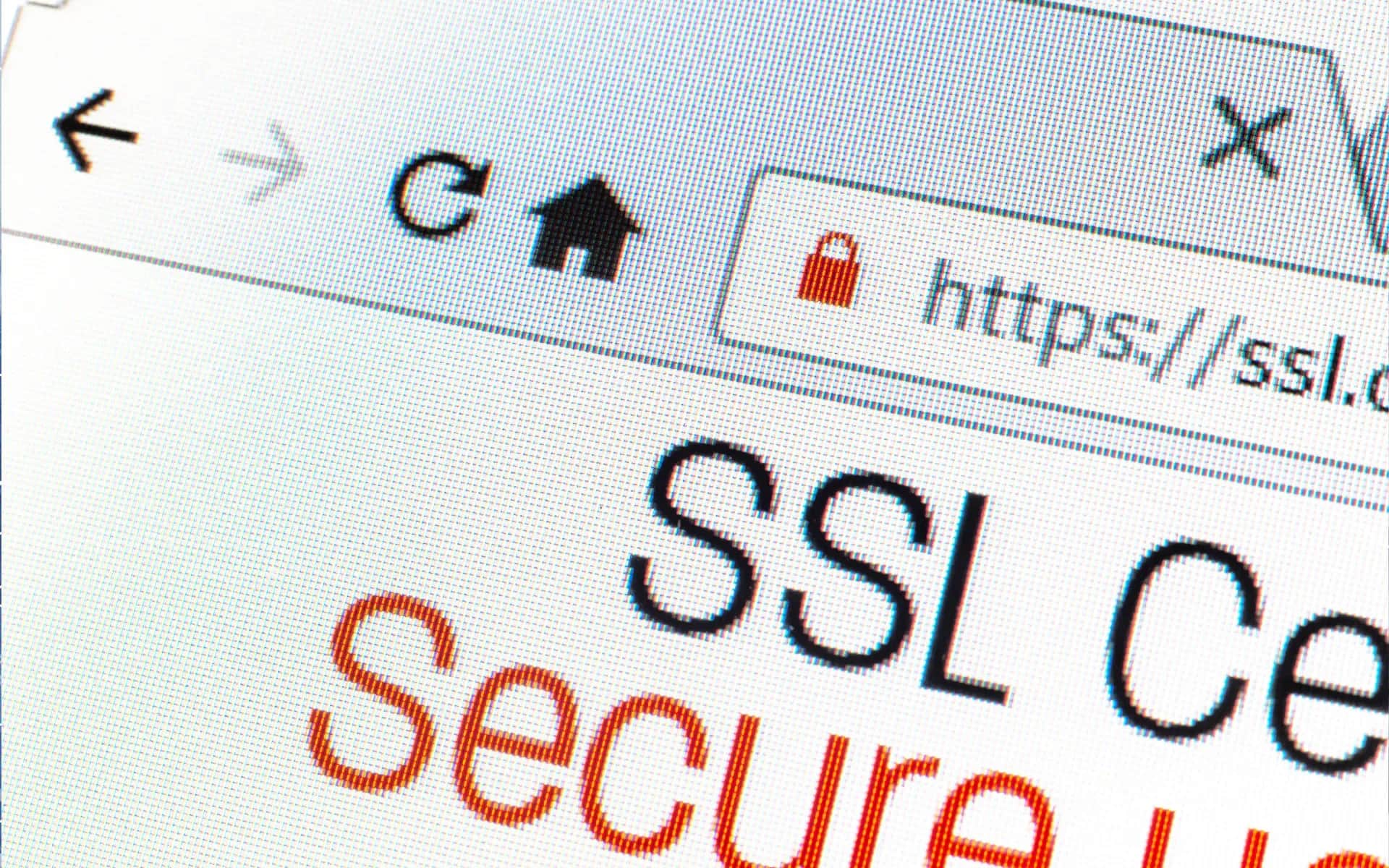
What do you find in the article?
- The concrete costs of not having SSL - Did you know that you could be losing as many as 84% of your customers due to browser warnings? And that's not all:RODO penalties can reach As much as 4% of your company's annual turnover.
- Choosing the right certificate - How do you choose between DV, OV and EV? We compare these options, taking into account the cost of implementation and the real return on investment depending on the size of your company.
- Migration without losing SEO position - Transitioning to HTTPS can be a challenge. We've developed an 8-step plan to help you maintain rankings and avoid technical pitfalls.
- Automation of certificate management - Consider tools that monitor expiration and renewal dates for certificates. They will save you many hours of work each month.
- SSL error diagnostics - What are the most common SSL problems that can lower conversions on your online store? Let's take a look at five of them and see how to fix them.
Introduction - why SSL/HTTPS is the foundation of online security
Imagine that every 39 seconds there is a cyber attack on companies around the world. By 2024, such incidents are becoming more common, and losses could average $4.45 million per incident. Meanwhile, applying basic protection such as SSL costs only a few tens of zlotys a year.
SSL/TLS are encryption protocols designed to protect data transmitted between a user's browser and a server. HTTPS is nothing more than HTTP with an additional layer of SSL/TLS security. In business practice, this means the presence of a padlock in the browser's address bar, giving customers confidence that they can safely enter their payment card information.
The statistics are inexorable. As many as 43% of cyber attacks target small businesses, and 60% of them will not survive more than six months after thedata security breach. In Poland, the average cost of an incident rose to PLN 5.2 million in 2024.
Implementing SSL encryption can bring tangible business benefits. It can increase customer trust by up to 84%, improve positioning in Google results and reduce riskhigh RODO penalties, which can be as high as 20 million euros. In addition, it eliminates browser warnings that can deter as many as 70% of potential customers.
The cost of implementation is usually 50 to 500 zlotys per year per certificate, plus a few hours of developer work. Compared to the potential millions of dollars in losses after an attack, this is really a token investment.
In this guide, you'll learn about the different types of SSL certificates, how to implement them, their impact on SEO, and what tools can help withsecurity monitoring. Everything step by step, without unnecessary technical jargon.
What are SSL/TLS and HTTPS? Key information for entrepreneurs
We often encounter the terms SSL and TLS, which are sometimes confused. SSL (Secure Sockets Layer) is an earlier technology that has already virtually gone out of use due to security problems. The current standard is TLS (Transport Layer Security), its newer and more secure version. Nevertheless, the industry still often uses the term "SSL" for certificates, although technically we use TLS. HTTPS, on the other hand, is nothing more than HTTP with an additional layer of TLS encryption.
For businesses, the difference is usually small - you buy an "SSL certificate", but actually use the TLS protocol. The most important thing is the versions: the minimum for businesses is TLS 1.2, and the current standard is TLS 1.3. Modern browsers block older versions.
The encryption process can be compared to a cache of two keys. The server has a private key (keeps it secret) and a public key (available to everyone). When a client sends data, it encrypts it with the public key. Only the server can decrypt them with its private key. This is a method of asymmetric encryption - very secure, but somewhat slow.
Therefore, after the initial "handshake," the parties switch to symmetric encryption, which uses a single, shared session key. It's a compromise between security and speed.
An SSL certificate is a digital proof of your company's identity. It is issued by a trusted Certificate Authority (CA), which confirms that the domain actually belongs to you. Users see the green padlock in their browser and feel more secure. Without the certificate, browsers show a "Connection is not private" warning.
The handshake process between the browser and the server takes only milliseconds, but is crucial. The browser checks the certificate, verifies its validity with the CA, agrees on the encryption algorithm and generates the session keys. Any error in this process results in a warning or no connection.
The impact on user experience is huge. HTTPS sites load faster with HTTP/2, don't display security warnings and build trust. On average, online stores without SSL lose about 40% of potential customers already at the browser warning stage. In 2024, having an SSL certificate is not just an option, but a necessity for every business.
Which SSL certificate should you choose for your business? A guide to the types
Choosing the right SSL certificate is a decision that depends on many factors, such as the size of the company, available budget and customer expectations. Not every company needs the most expensive solution, but every company should take care of basic security.
Why should small businesses choose a Domain Validated certificate?
DV certificates are an ideal option for startups, freelancers and small businesses looking for basic encryption. The certificate authority only verifies that you control the domain, which is usually done via email to[email protected] Or adding a special DNS record.
The process is quick and usually takes from a few minutes to a few hours. All you need to do is fill out an online form, confirm domain ownership, and the certificate will be sent to your email. No paperwork, no phone calls - the whole thing is done automatically.
This costs from £50 a year from providers such as Certum or Let's Encrypt (which are free). Premium options from companies like Symantec or DigiCert can cost 200-400 zlotys. The difference in encryption? None. You're paying for additional technical support and warranties.
What are the benefits of OV certification for medium-sized companies?
OV certificates offer an additional level of company verification. The certification authority verifies that your company actually exists, is registered and operates at the address you provide. The name of the company appears in the certificate, which customers can see by clicking on the padlock icon.
You will need an extract from the KRS or CEIDG, confirmation of your business address, and sometimes a phone call from a CA employee. The process usually takes between 1 and 5 business days. It's an investment in credibility - customers see that they're dealing with a real company, not an anonymous service.
The cost starts at $300 per year. That's more than DV, but the difference in customer perception is significant, especially in a B2B environment where trust is key for large orders.
Why do large corporations choose Extended Validation (EV) certification?
EV certificates offer the highest level of verification. A green bar with the company's name appears in the browser, which is a premium signal to customers. The verification process takes about a week and requires providing incorporation documents, checking with Dun & Bradstreet databases and speaking with an authorized representative.
In e-commerce, EV certificates can increase conversions by 15-25%. Customers are more likely to give their card details when they see the green name of a well-known brand. ROI? If a store generates millions in sales, the cost of 2,000 to 5,000 zlotys per year can pay for itself quickly.
However, it is worth noting that modern browsers have removed the green bar, replacing it with a subtle icon. EV still makes sense for banks and large platforms, but for a typical e-commerce site, an OV certificate is often sufficient.
Does SSL/HTTPS improve SEO on Google? SEO impact analysis
Google recognized HTTPS as an SEO factor back in 2014. At first the changes were not big, but now the situation is different. The algorithm strongly favors secure sites, and as of 2018, the Chrome browser marks sites without HTTPS as "unsafe."
Analyzing your competitors' security features can give you an edge. Just check which of the top 10 sites for a given keyword use HTTPS. Who has faster loading speeds? The SSL Labs tool can help you assess the encryption strength of your competitors. If most are using TLS 1.2, and you're implementing TLS 1.3, you're gaining a technical advantage.
SSL certificates also have a direct impact on Core Web Vitals, especially the Largest Contentful Paint (LCP). Modern protocols like HTTP/2 and HTTP/3 only work with HTTPS, making HTTPS pages load on average 15-20% faster than those with HTTP. This, in turn, translates into better rankings and a lower bounce rate.
The Decathlon store example shows how migrating to HTTPS can be beneficial. After switching to secure connections, organic traffic increased by 30% in three months. Similarly, IKEA saw a 25% increase in conversions after implementing EV certificates.
A fintech startup I was involved with in 2023 moved up 40 positions in search results after migrating to HTTPS. The key was to properly redirect URLs and update site maps.
To monitor the impact of the changes, it's a good idea to use the right tools. Google Search Console will indicate SSL-related indexing errors. SEMrush and Ahrefs can track positions before and after the migration, and WebPageTest will measure loading speeds. Setting alerts in Google Analytics for traffic drops allows you to react quickly to problems.
Let's not forget about soft signals. Users are more likely to click on results with a padlock in search results, which increases CTR and indirectly affects positions. In 2024, HTTPS is not just an additional asset, but a basic requirement in the fight for top positions.
How does SSL/HTTPS affect customer data security and compliance?
Ranking high on Google is one thing, but the real consequences of not having an SSL can hit you hard in the pocket, especially when it comes to regulations. In 2024, the regulations are unrelenting - any violation can carry penalties of millions of zlotys or euros.
What are the data protection requirements of RODO?
The RODO regulation requires companies to use "appropriate technical measures" to protect personal data. Although SSL is not explicitly mentioned there, the lack of encryption can be considered a violation of Article 32 on data security. It's sort of an automatic loser in the event of an audit by the DPA.
During a client audit, a lawyer specializing in RODO explained to me: "Sending contact forms over HTTP is like sending letters on open sheets of paper. The DPA won't accept the translation about lack of resources."
Documenting technical measures is a key part of regulatory compliance. Keeping a record of SSL certificates, their expiration dates and encryption configurations is essential. Inspectors will ask for these very documents in the first instance during an inspection. You'll find templates in the DPA guidelines, but the basic elements include certificate type, encryption strength, expiration dates, and responsible personnel.
Fines can really hurt a company. For example, the French data protection authority fined Google 60 million euros for inadequate security. In Poland, the record is a 220,000 zloty fine for a telecommunications company. Although large corporations are most often affected, the DPA is also increasingly inspecting small companies, especially those handling online payments.
What industry security standards do you need to know? PCI DSS and ISO 27001
PCI DSS is a standard that every company processing card payments must meet. Requirement 4.1 clearly states: "Use strong encryption and security protocols." Without an SSL certificate, there is no way to even begin the certification process. TLS 1.2 is the current minimum, but TLS 1.3 will be required starting in 2025.
Online stores have additional requirements. All payment forms must use HTTPS, and card data cannot be sent over unencrypted connections. Acquirer, the payment processing company, can block an account for PCI DSS violations. Without the ability to accept cards online, the store virtually ceases to function.
ISO 27001 certification gives an edge in public tenders and B2B contracts. It requires "cryptographic security" for all IT systems. SSL is the foundation - without it, auditors will not proceed to the next steps.
Security audits conducted by external companies can cost between 10,000 and 50,000 zlotys, but protect against fines running into the millions. One logistics client won a contract worth 2 million zlotys by being the only one to meet the requirements of ISO 27001. The investment in certification paid off with the first order.
Practical roadmap: How to implement SSL in your company?
Moving from theory to practice requires an orderly approach. A haphazard migration to HTTPS can be more costly than the cyber attacks that SSL was meant to prevent. A well-thought-out plan of action will ensure peace of mind and happy customers.
How to effectively audit the current state of security?
Start with an inventory of all domains and subdomains. Companies often forget about addresses such as staging.domain.pl, api.domain.pl or old campaign microsites. The Sublist3r tool can help you discover subdomains you may have already forgotten about. Certificate Transparency logs can reveal all certificates issued for your domain in recent years.
Next, identify mixed content - situations where the HTTPS site loads resources over HTTP. Check images, scripts, stylesheets and external APIs. Even a single HTTP resource will cause the browser to remove the green padlock. Chrome DevTools in the Security tab will show all mixed content problems on a specific page.
Prepare a sheet with the expiration dates of all certificates. Let's Encrypt certificates are only valid for 90 days, paid for usually a year or two. A logistics company I worked with lost 200K in sales because the certificate expired over the weekend and the store stopped working. Excel with alerts is the minimum, but it is better to automate monitoring.
A detailed process for migrating to SSL: Step-by-step guide
Backup is a must. A full copy of the database, files and server configuration must be ready before the migration begins. The backup plan should ensure that you can return to the previous configuration within 30 minutes. I had an e-commerce client where the failure lasted 6 hours because the backup was corrupted.
301 redirects are crucial to maintaining your position in Google, but they must be precise. Redirect every URL fromhttp://www.digitalvantage.pl/nasza-oferta athttps://www.digitalvantage.pl/nasza-oferta. Check canonical URLs, sitemap.xml and robots.txt - all should point to HTTPS. Google Search Console allows you to add a new HTTPS property and monitor the indexing process.
Updating internal links is time-consuming, but essential for performance. Each 301 redirect delays loading by 100-200 milliseconds. Tools like Screaming Frog will scan the site and pinpoint links that need updating. In larger systems, scripts for automatic database replacement will help.
How to effectively manage SSL certificates in the long term?
Automatic renewal eliminates human error. Let's Encrypt Certbot renews certificates every 60 days. Paid certificates may require vendor API integration or at least alerts 30 days before expiration. A customer with 50 domains saved 10 hours per month with automation.
Larger organizations need centralized management. Tools like HashiCorp Vault or AWS Certificate Manager allow you to control hundreds of certificates from one place. That way, the alert goes to the IT team, not the CEO on vacation in Thailand.
What are the most common SSL/TLS errors and how to fix them?
Even the best-configured certificates can sometimes cause problems. SSL errors are frustrating for users and can cost vendors hundreds of thousands annually. The key to avoiding serious losses is to identify and fix problems quickly.
"Your connection is not private" is a message that often appears on users' screens. What could be the cause of this? Often it is an expired certificate, an incorrect configuration or a problem with the system clock. If you see "NET::ERR_CERT_AUTHORITY_INVALID," it means the browser does not recognize the certificate issuer - a common problem with low-cost providers outside the trusted CA list.
"SSL_ERROR_BAD_CERT_DOMAIN" occurs when the certificate was issued for a different domain. For example, a certificate for "www.sklep.pl" will not work on "sklep.pl" without the prefix. Wildcard certificates (*.sklep.pl) solve this problem by covering all subdomains.
What is mixed content and how to avoid it when migrating to SSL?
Mixed content is when an HTTPS site loads resources over HTTP. Browsers block "unsafe" elements like scripts or iframes, but images are usually flagged with a warning. The result? No green padlock and a decrease in customer trust.
Chrome DevTools in the Console tab will show all blocked resources. Typical sources of problems include outdated payment APIs, social media widgets, analytics systems or image CDNs. The solution seems simple - swap HTTP for HTTPS, although not all external services support encryption.
What are the common SSL certificate chain problems and how to fix them?
A certificate chain is a hierarchy of trust leading from your certificate to the root CA. A missing link can cause verification errors in some browsers or on mobile devices. The server must provide the entire chain - your certificate plus intermediate certificates.
SSL Labs is a free tool that will scan your configuration in 30 seconds. An A+ grade indicates excellence, a B is a warning, and a grade below C requires immediate intervention. For more technical audits, SSLyze will check all supported cipher suites and protocols.
The cost of SSL errors can be really severe. An electronics e-store lost 60% of its conversions due to a mixed content error in the shopping cart. The problem lasted all weekend because no one monitored the alerts. A B2B platform lost a million-dollar contract when the certificate expired during a presentation to a key customer.
Real-time monitoring is the only effective defense against such situations.
SSL security monitoring and optimization
Implementing an SSL certificate is just the beginning of the journey toward a secure online presence. Real security requires constant monitoring and regular optimization. Companies often suffer huge losses because they treat SSL as something that can be set once and forgotten about.
Key indicators worth monitoring for SSL security
To ensure effective security, it is a good idea to pay attention to several key indicators. First of all, make sure that certificate availability (uptime) exceeds 99.9%. The response time during an SSL handshake should be less than 200 ms, and the SSL Labs rating should be a minimum of A. Also monitor the bounce rate on pages with forms, as an increase in the bounce rate may suggest certificate problems. For e-commerce, tracking conversions during the shopping process is key - a drop in them could indicate problems with mixed content or expired certificates.
Why are regular audits and testing crucial to SSL security?
Regular security audits are recommended on a quarterly basis, while penetration testing can be done once a year. The cost of an external audit ranges from 5K to 15K. However, free tools such as Nmap or OpenVAS are a good place to start. One financial company discovered during such an audit that their backup server was using an outdated TLS 1.0, which could pose a potential threat.
Why are protocol updates and cipher suites important for SSL security?
It is worth paying attention to protocol updates and cipher suites. TLS 1.3 is becoming increasingly popular, offering better performance and security. It's worth disabling older algorithms such as RC4 or MD5, as Google plans to block older protocols starting in 2025. One of our customers noticed 15% faster page loading after switching to TLS 1.3 with properly selected cipher suites.
Key elements of SSL reports for management: What to include?
When preparing reports for management, use language that the business understands, avoiding technical jargon. Instead of writing about increasing key entropy, it is better to point out that we have reduced the risk of attack by 40%. Key metrics include the number of attacks blocked, time of service unavailability and potential financial losses. A dashboard with real-time alerts allows the CEO to quickly assess the state of security.
Key aspects of SSL budget planning in a company
Budget planning requires anticipating future trends. Although wildcard certificates are becoming more expensive, they significantly reduce the work of the IT department. Automation may be costly in the beginning, but it eliminates human error in the future. For a company with 20 domains, a 50K investment in monitoring pays for itself after the first failure is avoided.
Summary - What are the next steps after SSL implementation?
Nowadays, having SSL/HTTPS is no longer just a choice, but even a business necessity. Why should you opt for it? First of all, there is a noticeable improvement in customer trust by as much as 84%, better positioning in Google, compliance with RODO requirements and no browser warnings. The cost of implementation is a mere 50-500 zlotys per year, which is a small amount compared to the potential millions in losses after a cyber attack.
How do you go about it? It depends on the size of the company. For startups, a free Let's Encrypt certificate is often enough. Medium-sized companies might consider OV certificates, which cost about 300-500 zlotys. While large corporations, especially in the e-commerce industry, should think about EV or at least OV certificates, combined with real-time monitoring.
Recommended tools:
- SSL Labs to audit configuration
- Chrome DevTools to identify mixed content
- Google Search Console to monitor migration
- Certbot for automatic renewal
The first step should be a free security audit of your site. You can start by using SSL Labs to scan your domain with the Qualys tool and make sure all subdomains have up-to-date certificates.
If you need support implementing SSL or migrating to HTTPS, Digital Vantage's team is ready to perform a comprehensive security audit and implement the necessary solutions without risking your site's current position in Google.
⚠️Important
Implementing SSL and HTTPS is a crucial step in securing your website. A poorly executed migration can cost 2-3x more than planned. Consult an expert to avoid costly mistakes.
What's next?
If you plan to implement in the next 2-3 months:
First steps:
- Conduct a security audit of your current site - Use SSL Labs to evaluate the configuration and identify potential problems.
- Choose the right type of SSL certificate - Based on your company size and budget, decide on DV, OV or EV.
- Schedule a migration to HTTPS - Prepare a redirection plan and update internal links to avoid SEO problems.
Useful tools:
- SSL Labs - to audit the configuration
- Certbot - for automatic certificate renewal
Do you need help?
- Make an appointment for a free consultation - We will discuss your case and help you plan your implementation
If you are still gathering knowledge
Recommended articles
- Backup and disaster recovery - learn how to protect your data from loss
- Updates - Understand why regular updates are critical to security
- RODO and Privacy - learn about RODO compliance