Marketing on the InternetCMS - Content Management SystemContent MarketingVideo Content CreationSocial MediaSEO and Website Optimization14 min czas czytania20 518 znaków2779 słów
Blog and news - trends in content marketing
Increase conversions with quizzes, calculators and short-form videos. Practical examples of ROI, AI personalization and SEO tips for voice search - get started.
Redakcja Digital VantageYour Partner in Business, Digital Vantage Team · Digital Vantage team is a group of experienced professionals combining expertise in web development, software engineering, DevOps, UX/UI design and digital marketing. Together we carry out projects from concept to implementation - websites, e-commerce stores, dedicated applications and digital strategies.
Our team combines years of experience from technology corporations with the flexibility and immediacy of working in a smaller, close-knit structure. We work in agile methodologies, focus on transparent communication and treat each project as if it were our own business.
The strength of the team is the diversity of perspectives - from systems architecture and infrastructure, frontend and design, to SEO and content marketing strategy. As a result, the client receives a cohesive solution where technology, aesthetics and business goals go hand in hand.
Publikacja
Aktualizacja
What do you find in the article?
- AI personalization in practice - Specific tools (GPT, Claude, Copy.ai) to automatically match content to customers and ROI examples from different industries
Example: GPT can generate variants of email titles tailored to audience segments, Claude is sometimes useful for modulating brand tone, and Copy.ai quickly creates product descriptions - together they can shorten the sales cycle and improve CTR by several percent in A/B testing. - Interactive content as lead magnets - Quizzes, calculators and AR/VR increase engagement by 300% and effectively generate business contacts
Practically: a simple ROI calculator for B2B services, a "which subscription plan fits your business" quiz, or virtual fitting rooms in e-commerce - these are tools that often translate into better quality leads. - Video-first strategy for 2024 - Short-form video (TikTok, Reels) dominates B2B, and vertical content increases mobile conversions by 90%
In practice, he may suggest focusing resources on short product demos, case studies and quick tutorials in a vertical format - for example, a 30-second feature demonstration with a CTA may work better than a long webinar. - Voice search is changing SEO - optimization for long question phrases and structured data is the new standard for better visibility in Google
Implementation: FAQs optimized for natural language questions, tagging answers with diagrams (FAQ/HowTo) and testing on voice devices. This is probably one of the fastest ways to improve local visibility. - Sustainable content marketing - evergreen content and content clusters build long-term organic traffic instead of short-term reach spikes
Example: instead of multiplying one-off articles, it is better to create a series of guides (pillar + cluster), update them regularly and measure traffic month to month - the effects usually build up over time.
Introduction - Why content in 2026 needs a new approach
The average Internet user's attention span has dropped to about 8 seconds - less than that of a goldfish. In that short window, your company needs to capture the viewer's interest, build trust and get them to take action. It sounds like a lot, but with the right strategy it's doable.
The digital content landscape is changing faster than many marketers anticipated. Social media platforms are generating millions of posts a day, and algorithms are shifting emphasis - formats that worked a year ago may be losing reach today. This may suggest that what is needed is not so much more content, but better alignment.
Entrepreneurs today face two major challenges. First, fighting for attention in a sea of information; second, reaching an audience that is jumping between content faster than ever. A one-size-fits-all post once a week is no longer enough. You have to think about context, intent and format.
Traditional methods are losing effectiveness. Static blog posts often generate less traffic than they used to. Universal newsletters - without segmentation - can land in spam or be ignored. Long-form YouTube videos sometimes lose out to 15-second clips on TikTok. That's not to say that long-forms are dead, but it seems their role needs rethinking and adaptation.
In this article, we'll discuss six key trends that are likely to shape content marketing in 2024: AI-driven personalization, interactive content, the dominance of video (especially short formats), the rise of audio content, a long-term value-building strategy, and the importance of data and optimization. Each of these directions represents specific opportunities to increase sales and improve engagement.
Companies that have already implemented these solutions report engagement increases of 40-60% and conversion improvements of up to 25%. This shows that it's not a matter of chasing every innovation, but a conscious choice of tools tailored to the business and audience. For example: a personalized email recommending a product based on browsing history can yield better results than a mass mailing; an on-page quiz can increase leads; a short instructional video can generate quick shares.
We begin with the revolution brought by artificial intelligence in content personalization.
How can we use AI to personalize content and increase customer engagement in 2026?
Imagine every customer getting tailor-made content - only what really interests them, and at the right time. Today, this is not science-fiction. Thanks to artificial intelligence, personalization is becoming a practical communication tool.
How to implement AI tools (GPT, Claude, Copy.ai) to create scalable content in the company?
AI analyzes user behavior in real time. It tracks which articles attract attention, which products are viewed the longest, when and how often emails are opened. Based on this, the systems automatically select content - some users will see gadget reviews, others will see travel suggestions.
GPT-4 allows you to create multiple variations of content at scale. Copy.ai can generate headlines tailored to different audiences. Claude, in turn, can analyze the tone of the communication and indicate which style is likely to work better for a given group. This interoperability of tools allows solutions to be tested and implemented quickly.
Segmentation has become more precise - no longer just age or gender, but also behavioral patterns. How much time someone spends on the site, which channels he or she prefers, what time of day he or she is most active - all this can suggest what content will be most effective. For example: a user who regularly views running gear might get a review of top models along with promotions; a person browsing last minute deals is likely to see dedicated travel suggestions.
Step by step: how to implement AI personalization in marketing and sales in 2026?
Modern sites show different content to different visitors. A first-time visitor gets basic information about the company; a regular customer - news, recommendations and promotions. It doesn't have to be complicated: already simple rules based on user behavior can significantly improve the experience.
Newsletters are no longer homogeneous. Instead of a mass mailing, each recipient can receive a personalized set of articles and offers - for example, a subscriber interested in ecology will get reports on sustainable products, while a culinary lover will get recipes and promotions on kitchen appliances.
Customer journey paths can also be differentiated. A young entrepreneur will receive a series of emails with the basics of running a business; an experienced CEO will see advanced strategies and case studies. In practice, this means creating several communication paths and assigning users based on their activities and profile.
In one example, an online fashion store implemented personalization and increased sales by 35%. Customers were given recommendations based on previous purchases and categories browsed - for example, matching accessories were suggested for a summer dress. A B2B company, on the other hand, segmented content by customer size: startups received practical guides and templates, large corporations received industry reports and extended case studies.
The key is to collect the right data and use it wisely. The more you understand about the customer, the better you can tailor your communications, but always in compliance with RODO and privacy rules. It's a balance: personalization gives you an edge, but requires a responsible approach to data.
AI in personalization is not the future. It's the present for companies that want to stand out in the information glut and build long-term relationships with customers.
How do you use interactive content to increase engagement and generate better leads?
It's becoming less and less enough to just read or watch - users want to participate. They want to click, test, inspect and influence what appears on the screen. This is a clear shift in audience behavior.
Interactive content generates 2-3 times more engagement than static posts. Users spend about 13 minutes on average with them, while with a traditional article it's usually 2-3 minutes. This difference may suggest that interaction translates into deeper interest.
Which interactive content works well in B2B and e-commerce and why?
Quizzes are real magnets for potential customers. Questions like "What type of entrepreneur are you?" or "Which solution fits your business?" not only engage, but also allow you to collect valuable data. Completion rates for such quizzes can reach 85%. A practical example: a marketing agency used a quiz to segment leads and obtained higher quality contacts at a lower acquisition cost.
Calculators respond to specific needs - ROI calculator, project cost calculator, savings calculation tool. People like to check the numbers for their own business. A software company (SaaS) increased conversions by 40% with a calculator showing the time saved by their tool - a real-world example of ROI.
360° content and augmented reality are changing the way products are presented. Instead of static photos, users can take a virtual walk around the office; instead of a dry description, they can "try on" a piece of furniture in a room using AR (an example is an application similar to IKEA Place). Such solutions are likely to make the customer more confident in their purchase, because they allow them to see the product in context.
Live streaming builds trust in real time. A webinar, Q&A session, or behind-the-scenes show - these are forms that give authenticity and direct contact with the brand. The audience sees live reactions, asks questions and gets immediate answers - an intimacy that is hard to match with recorded material.
How do you plan and integrate interactive content into your sales funnel in 2026?
Different stages of the funnel require different formats. At the top of the funnel, it is worth putting engaging quizzes that attract attention and help collect contacts. In the middle, calculators and product configurators will work well - they make the buying decision easier. At the bottom - live demonstrations and AR that can move the viewer from interest to purchase.
Tools such as Typeform, Outgrow or Mentimeter do not require programming skills. In a few hours, you can prepare a professional quiz or survey and, if necessary, integrate the result into your CRM.
Key metrics include time spent with content, completion rate and quality of leads collected. Interactive content may have less reach than a viral post, but users are more engaged and more likely to make a purchase. This, in turn, may suggest a better cost-to-value ratio in the long run.
And remember - not everything has to be high-budget right away. A simple survey on Instagram Stories is also interactive and can provide valuable information about your audience.
Why is a video-first strategy crucial in 2026 and how to implement it?
After the era of interactivity, the time has come for a format that has almost taken over the Internet. 92% of marketers consider video a key part of their strategy - and this is probably no coincidence. It seems that consumers prefer content that is moving, fast and easy to digest.
Latest video consumption statistics and how they affect marketing strategies in 2026
Short videos have triumphed over long forms. Platforms such as TikTok, Instagram Reels and YouTube Shorts generate billions of views per day. The average user spends about 2.5 hours a day watching video on their phone - that's a lot of time for small, powerful messages.
Short-form video isn't just for entertainment. 73% of B2B decision makers have watched short product videos in the last month. A thirty-second clip can have a greater impact on a purchase decision than a ten-page brochure - this may suggest that concreteness and speed of delivery matter.
Vertical video has become the default choice. 78% of the time spent on phones is vertical. Companies that still record only horizontally are likely to lose coverage because algorithms prefer the 9:16 format.
Video is also on the rise in B2B communications. CEOs are recording monthly summaries, salespeople are sending personalized clips instead of long emails. Case in point: a short product demo sent by a salesman can increase the chances of conversion - according to research, conversion increases by about 80% when a video appears in the mailing sequence.
How to create effective video strategies for TikTok, Reels and YouTube
Each platform has its own rules of the game. LinkedIn bonuses educational videos up to 3 minutes long. Instagram Reels rewards following trends and well-chosen music. YouTube Shorts, on the other hand, bonuses quick editing and expressive hooks in the first seconds.
One long presentation can provide material for dozens of short clips. An hour-long webinar is an excellent source of content for an entire month: pull out the best quotes, interesting statistics and practical tips. For example, you can make a series of 10-20 second videos with key insights out of a 60-minute training.
User-generated content (UGC) often builds trust better than top-notch production. A recording of a satisfied customer taken with a phone can be more credible than a directed spot. 86% of consumers trust user-generated content more than traditional advertising - an important tip when planning creative budgets, it seems.
Practical tips for entrepreneurs: how to launch an effective video strategy faster
Professional video doesn't have to require a Hollywood budget. A good smartphone, thoughtful lighting and clear sound will suffice in most cases. A ring light for about £100 often gives a better result than hiring a studio for hours. Example: a short product test recorded with a phone with natural light and an external microphone can look very professional.
Track completion rate, not just number of views. It's better to have 1,000 people who watched the entire video than 10,000 who turned off after 3 seconds. Watch time is one of the most important metrics for algorithms and for actual content effectiveness.
The biggest mistake? Entering too slowly. You have about 3 seconds to catch your attention. Start with the most interesting part - a question, a surprising statistic or a powerful image. You can leave the introduction for last or keep it short.
The second common mistake is ignoring subtitles. About 85% of Facebook videos are viewed without sound; subtitles are not an option - they are a necessity. A simple example: adding subtitles increases content accessibility and viewership in public places where users have their phones muted.
How to prepare content for voice search and podcasts to increase visibility
When most of the focus is on video, the silent revolutionary is gaining ground. Audio content is going from strength to strength, and voice search is slowly transforming the rules of the game in SEO.
How to use podcasting to build an expert brand and attract leads
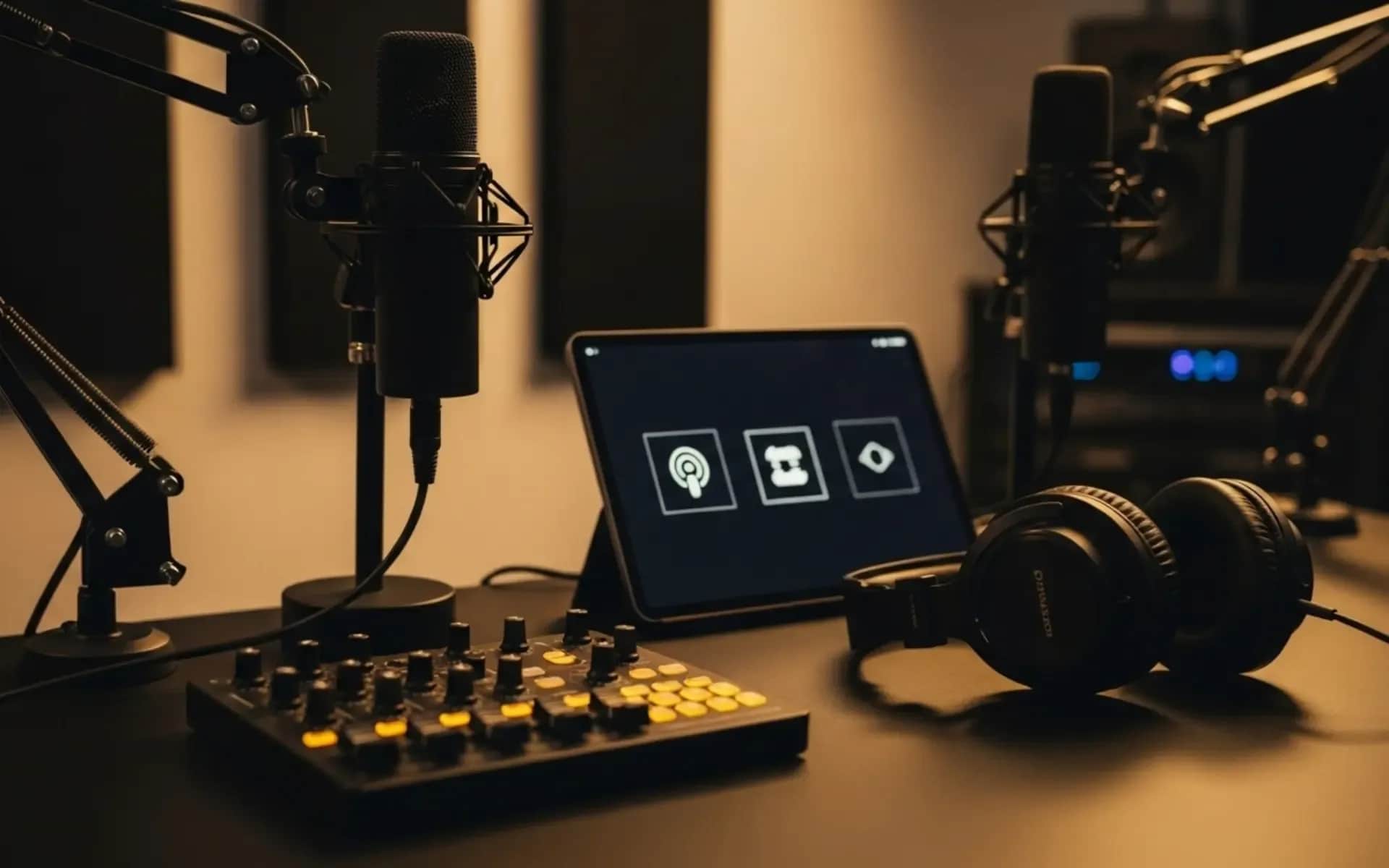
A podcast is one of the most intimate formats - the listener has you in his or her ear while running, driving or cooking dinner. Such presence builds a bond difficult to achieve with other channels.
Regular podcast publications position the brand and presenter as an expert in their field. Half-hour talks on trends or case studies are often more impressive than dozens of short posts on LinkedIn. It can also suggest a more trusting audience - especially when the content is practical and consistent.
Guest broadcasts are an obvious way to increase reach. Inviting an influencer, expert or satisfied customer brings the episode to their network of contacts. In practice, this means lower listener acquisition costs - probably well below the cost of traditional campaigns. Example: an interview with the owner of an e-commerce store can attract his customers and, at the same time, listeners interested in the topic of online sales.
Monetization often comes naturally. According to research, podcast listeners buy more often than average Internet users, which opens up paths to sponsorship, product placement or selling your own courses and tools. It's worth experimenting: short offer after episode, exclusive content for subscribers or packages for advertisers - all these models work depending on the audience.
How to optimize FAQs and content for voice queries to improve visibility
"Hey Google, how do you increase your online sales?" - is not a distant vision, it's the way we increasingly formulate queries. About 50% of adults use voice search every day, so algorithms and your content should adapt to this.
People talk differently than they write. Instead of the short phrase "increase conversions," you'll hear the full question, "How can I increase sales in my online store without increasing my advertising budget?" Content optimized for voice search should incorporate natural, longer phrases and conversational forms of queries.
Questions are SEO gold in the voice era. Phrases starting with "how," "why," "what it means" appear most often. Structure content around real customer questions - Q&A in articles, FAQ section on product pages, headlines in the form of questions. Practical example: instead of an extended article on conversion optimization, prepare a short piece on "How to shorten the purchase path" with three specific steps.
Featured snippets have become the king of results because Google often reads them out loud. This seems key: clear, short answers in the first paragraph, structured lists and definitions increase the chances of this placement. For example, the answer to the question "How do I speed up my online store?" should include 1) reducing loading times, 2) optimizing images, 3) simplifying the shopping cart - straightforwardly and without complexities.
Audio and voice search are no longer just a fad. It's a part of everyday life that is likely to change the way people consume content and search for information. It makes sense to adapt your strategy - from podcast format to text structure - before your competitors can do it better.
How do you build sustainable content marketing that delivers results for years to come?
The chase for viral content is tiring. Thousands of posts disappear after one day, and companies keep pumping out content like a conveyor belt. The results remain flat. Maybe you should change your approach and start thinking long-term.
How to plan and create evergreen content that generates traffic and leads
The real value lies in timeless content. The article "How to write an effective email" will be useful one year from now and two years from now. In contrast, a viral about a new trend on TikTok dies within days.
Content clusters can be a game changer in SEO. Instead of individual, scattered articles, you build an ecosystem: the main topic is the hub, and smaller texts are the spokes. Google often rewards such a structure with better rankings. A practical example: hub "Project management", and spokes "Planning tools", "Status report templates", "Case study: implementation in company X". Such organization helps users and search engine robots understand that you have deep knowledge in a particular area.
Updating existing content often gives a better return than constantly writing new content. Just refresh the statistics, add new sections or examples - and an article from 2021 can enter the top 10 search results again. In practice, companies that regularly revise their bestsellers see an increase in traffic and conversions without having to create entirely new publications.
How do you leverage the community to create engaging content and grow brand trust?
The community can create content for you - and cheaply. Satisfied customers record short testimonials. Users are eager to share the effects of product use. Industry experts agree to guest post. All of this adds an authenticity that is often missing from corporate productions.
Practical ideas: a hashtag campaign (#MyDesk), a contest for the best product photo, a "customer of the month" series featuring real use cases. User-generated content works better because it is credible and scalable. Vanity metrics are going away - likes and views do not necessarily translate into sales. Comments, shares and time spent with content seem much more important. It's better to have 100 engaged audiences than 10,000 passive ones, which is likely to yield a better return in the long run.
What new metrics do you measure in content marketing to gauge real business impact?
Customer lifetime value is a reliable test of the quality of the content you create. Customers acquired through valuable content stay longer and buy more. A blog may not generate leads directly, but it builds trust, which later translates into higher orders.
Modern dashboards combine content with sales results. Google Analytics 4, HubSpot or Salesforce are getting better and better at showing the full path - from the first article, to the webinar and free trial, to completing the transaction. An example of the path: a reader comes across a guide, signs up for a newsletter, attends a webinar and after a few weeks decides to make a purchase. Seeing such connections makes it easier to assess the real impact of content on revenue.
Sustainable content marketing is a marathon, not a sprint. It requires patience and regularity, but done correctly, it builds a stable foundation for business growth for years to come. It seems slower, but probably more profitable than chasing short-term hits.
Summary - how to start transforming your content strategy
The six trends we have described are not distant predictions - they are tools that are already working to the advantage of the competition. Research and market practice suggest that AI-based personalization can significantly increase conversions, interactive content extends engagement by up to five times, and video generates significantly more shares than text or graphics alone. Such numbers are worth treating as a guideline, not a guarantee, as effectiveness depends on the industry and execution.
You don't have to implement everything right away. Start with one trend that best fits your business. For example:
- An e-commerce store can benefit from personalized product recommendations and dynamic mailings.
- A B2B company is likely to make better use of podcasts with expert talks or webinars with case studies.
- A local service should try short videos on Instagram or testimonials showing implementations and customer feedback.
What's next?
Concrete first steps (next 2-3 months)
- Quick audit of content and channels (1 week)
Review top 10 posts / videos / mailings - check engagement, viewing time and conversions. Identify 1-2 formats that are already working best. - Design a 4-week pilot (2-3 weeks of preparation + 4 weeks of test)
Example of a pilot in the budget of 10-30k PLN and with a team of 2-3 people: - Personalization of mailing + 3 variants of titles with GPT generation (A/B test).
- Short 3×30-second video (smartphone, ring light, external microphone) for Reels/Shorts with simple CTA.
- Quiz or ROI calculator (Typeform/Outgrow) as a lead-magnet.
Measure CTR, lead conversion → demo/purchase and acquisition cost.
- Assign roles and budget (total, 1 day)
Who does the content, who handles the advertising and CRM, who analyzes the results. Plan a 20% buffer in the budget for unforeseen costs.
Tools that are worth using right away
- GPT / Copy.ai / Claude - quick copy variants and header tests
- Typeform / Outgrow - quizzes and lead-magnet calculators
- InShot / CapCut - short-form video editing on your phone
- Simple analytics in CRM (HubSpot/Google Analytics 4) - tracking the path from content to sales
Do you need support?
- Make an appointment for a free consultation - discuss priorities and the proposed pilot (30 min)
Deepen your knowledge (recommended reading)
- Personalization AI - case study and checklist - Why you should start with mailing and what KPIs to measure
- Video-first: short films for B2B - How to make 10 short clips out of 1 webinar
- Interactive content: quizzes and calculators - examples, CRM integrations and metrics
Important notes
- Remember RODO when collecting data and personalization - simple consents and transparency are a must.
- Don't try to implement everything at once. It's better to test a small hypothesis area and scale what works.
About the Team
Digital Vantage Team
Your Partner in Business, Digital Vantage Team
Digital Vantage team is a group of experienced professionals combining expertise in web development, software engineering, DevOps, UX/UI design and digital marketing. Together we carry out projects from concept to implementation - websites, e-commerce stores, dedicated applications and digital strategies. Our team combines years of experience from technology corporations with the flexibility and immediacy of working in a smaller, close-knit structure. We work in agile methodologies, focus on transparent communication and treat each project as if it were our own business. The strength of the team is the diversity of perspectives - from systems architecture and infrastructure, frontend and design, to SEO and content marketing strategy. As a result, the client receives a cohesive solution where technology, aesthetics and business goals go hand in hand.